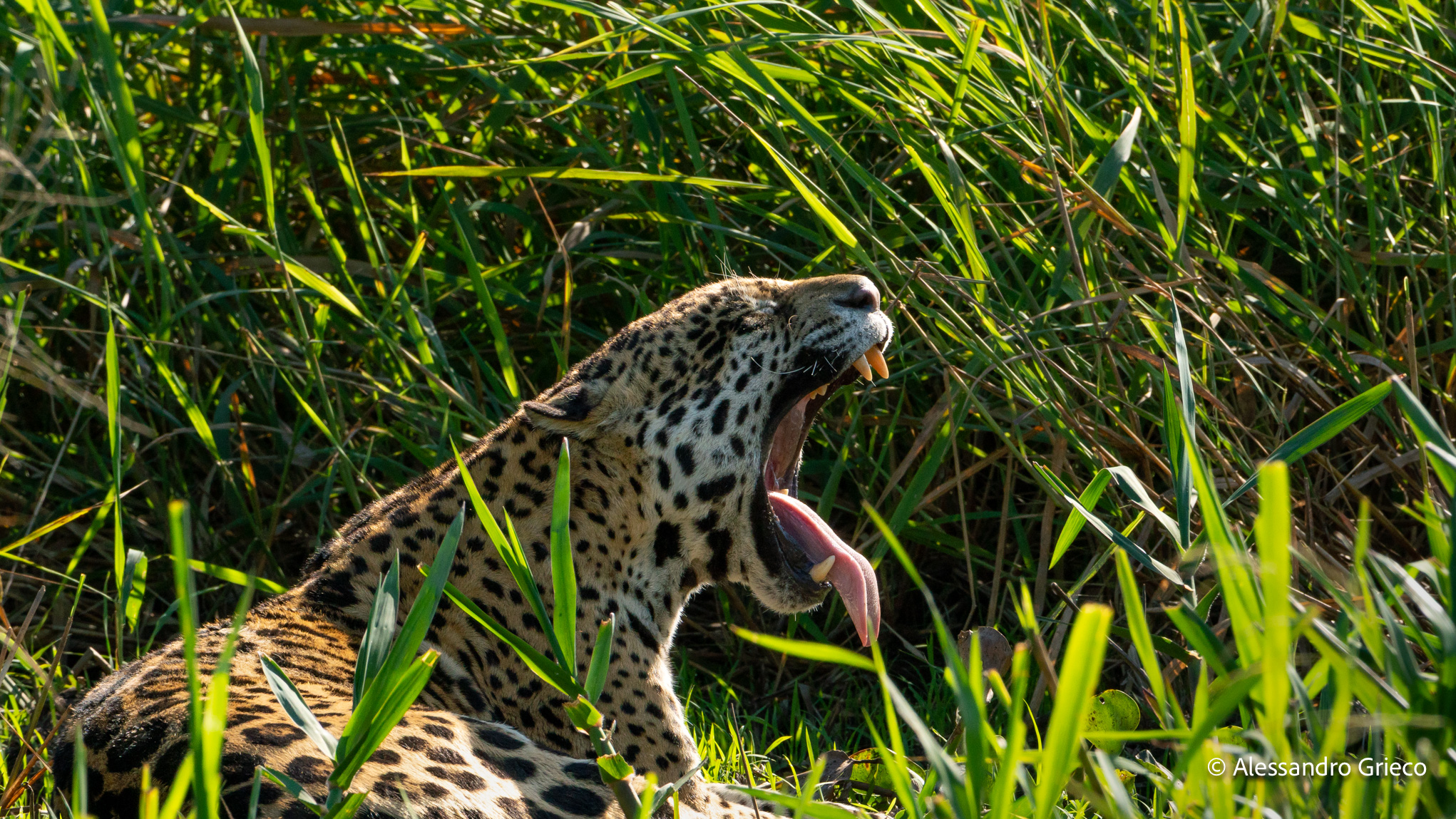
As wildlife lovers, we found here our promised land. The biggest wetland on earth — more than two hundred thousand square kilometres of rivers, lagoons and flooded forest — and the realm of its majesty: the jaguar, the king of the Americas.
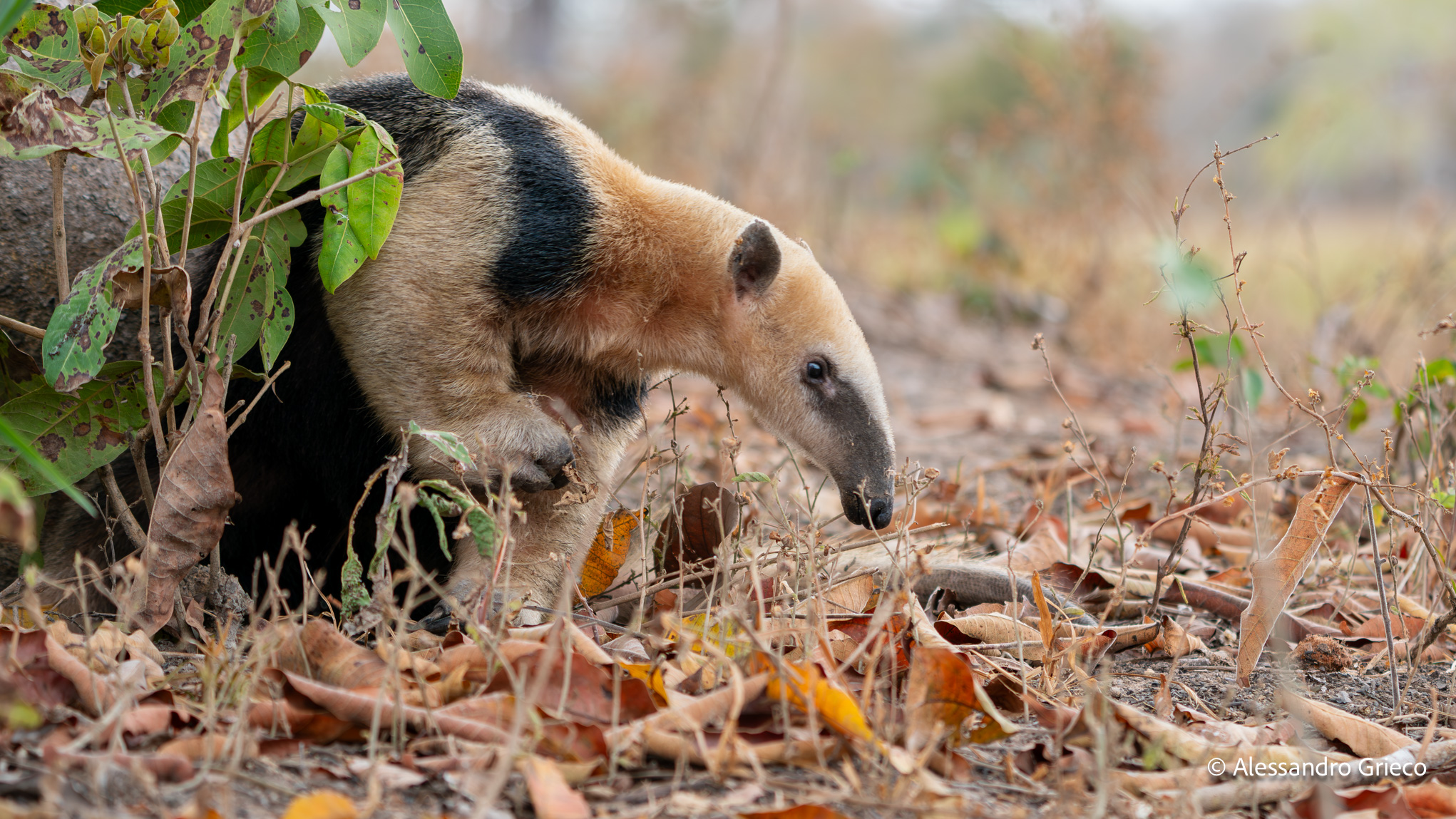
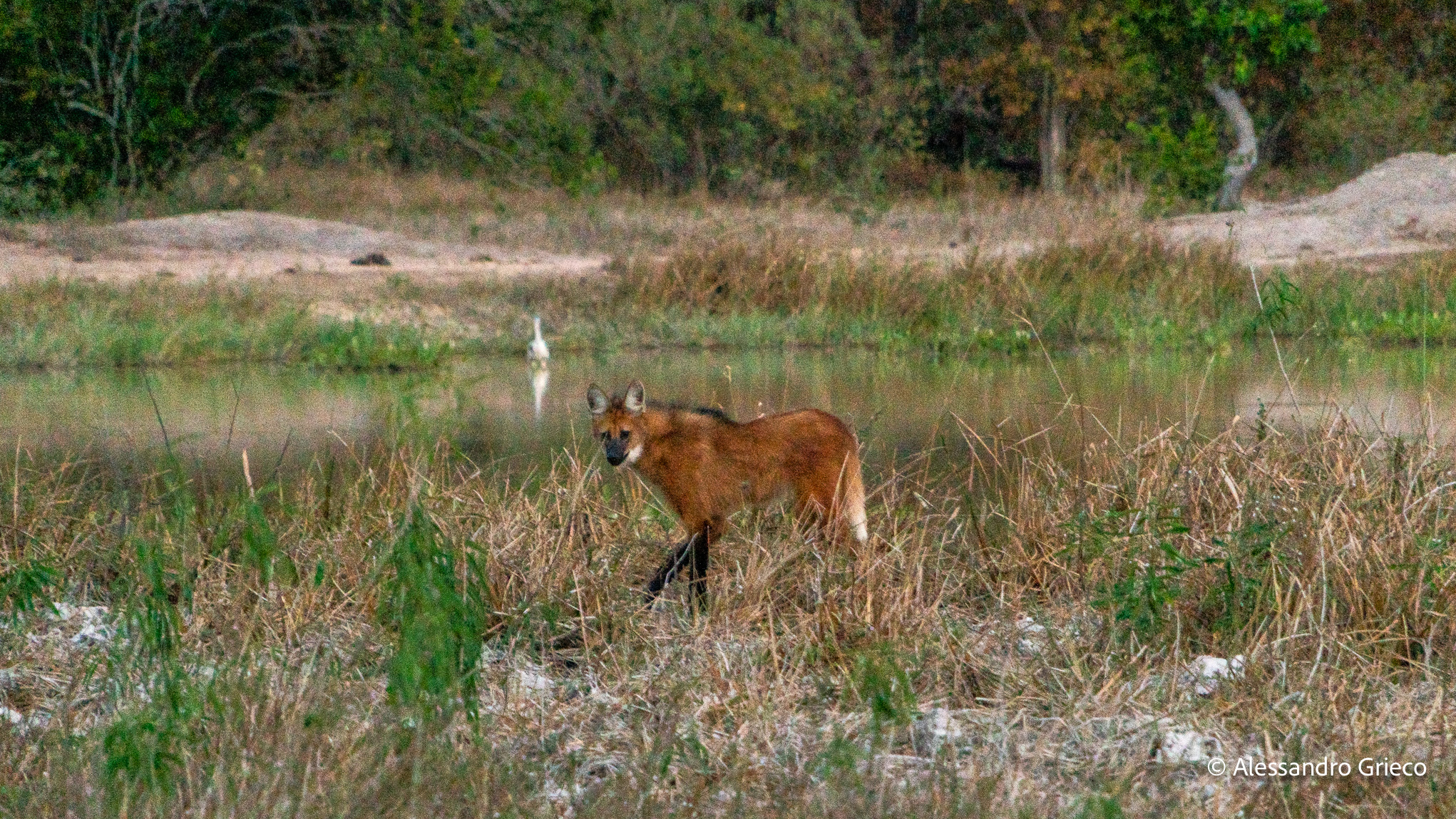
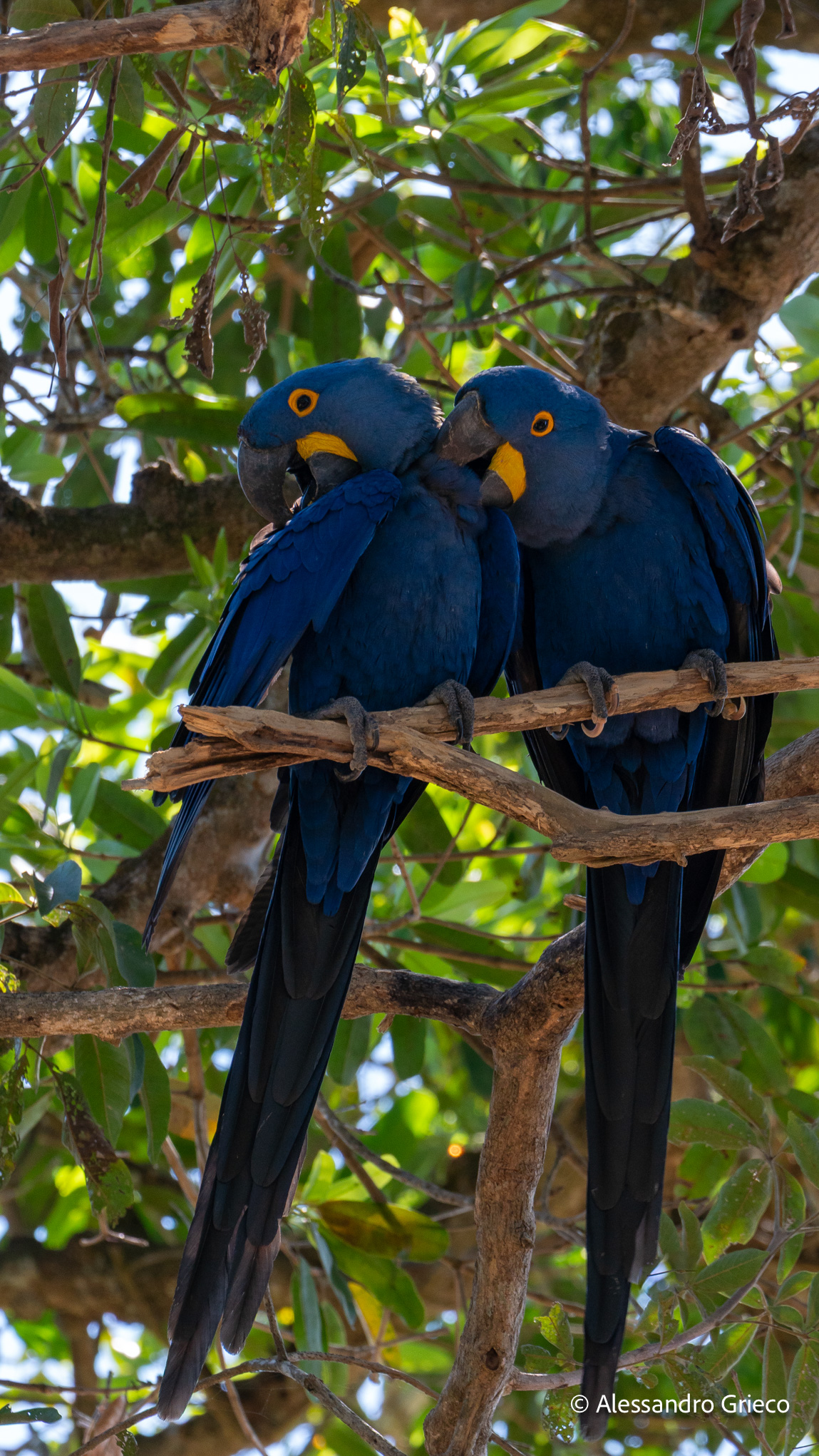
You enter the Pantanal along the Transpantaneira, a single dirt road that runs straight into the wetland, bridge after wooden bridge, each one a small theatre of its own. But to drive it is to cross into another world — a place so dense with life it is genuinely difficult to believe, growing wilder with every bridge you cross. Caimans stacked along the banks like driftwood, storks and herons, capybaras grazing in families, and — if you are lucky — a tapir crossing ahead of you, or the giant anteaters, which we saw many times, including the small ones I could not stop photographing. And once, at dusk, right at the edge of the fazenda itself, something rarer than anything the river gave us: a maned wolf, slender and elegant, fox-red and furtive, crossing the open ground far off and gone again before we had properly understood what we were looking at. You wake every morning to the parrots; we had two hyacinth macaws, a vast electric blue, crossing the sky in pairs above the fazenda. You spend your days here surrounded constantly by dozens of species at once: walking the land on horseback, sliding in a rowing boat down what passes for a river between the trees, always with animals on every side. And all of it on ground that, for months of the year, lies completely underwater.
Porto Jofre is the frontier. It sits at the very end of the Transpantaneira — the edge of civilisation and of humanity, made of a few low wooden houses. Beyond it there is no more road, and no more us: only the kingdom of the jaguar.
You go out onto the water and the river becomes a stage. You drift surrounded by hundreds of caimans lying with their jaws open to the sun, by capybaras, by giant otters — noisy, restless, endlessly curious. And then the jaguar appears, but never all at once. First the vegetation moves without showing anything, a presence that does not yet declare itself. Then the gaze — that powerful, level stare from inside the green. And only then the animal itself, emerging in full, with all its force and presence: powerful, elegant, completely sovereign. Over a few days we saw nine of them — nine — and every single one stopped something in us. We watched one walk the sand of a riverbank like a stage, slip into the water, and — curious — come terribly close to the boats. We were lucky enough to see a courting pair. There is a theatrical royalty to the way a jaguar reveals itself that no photograph fully holds.
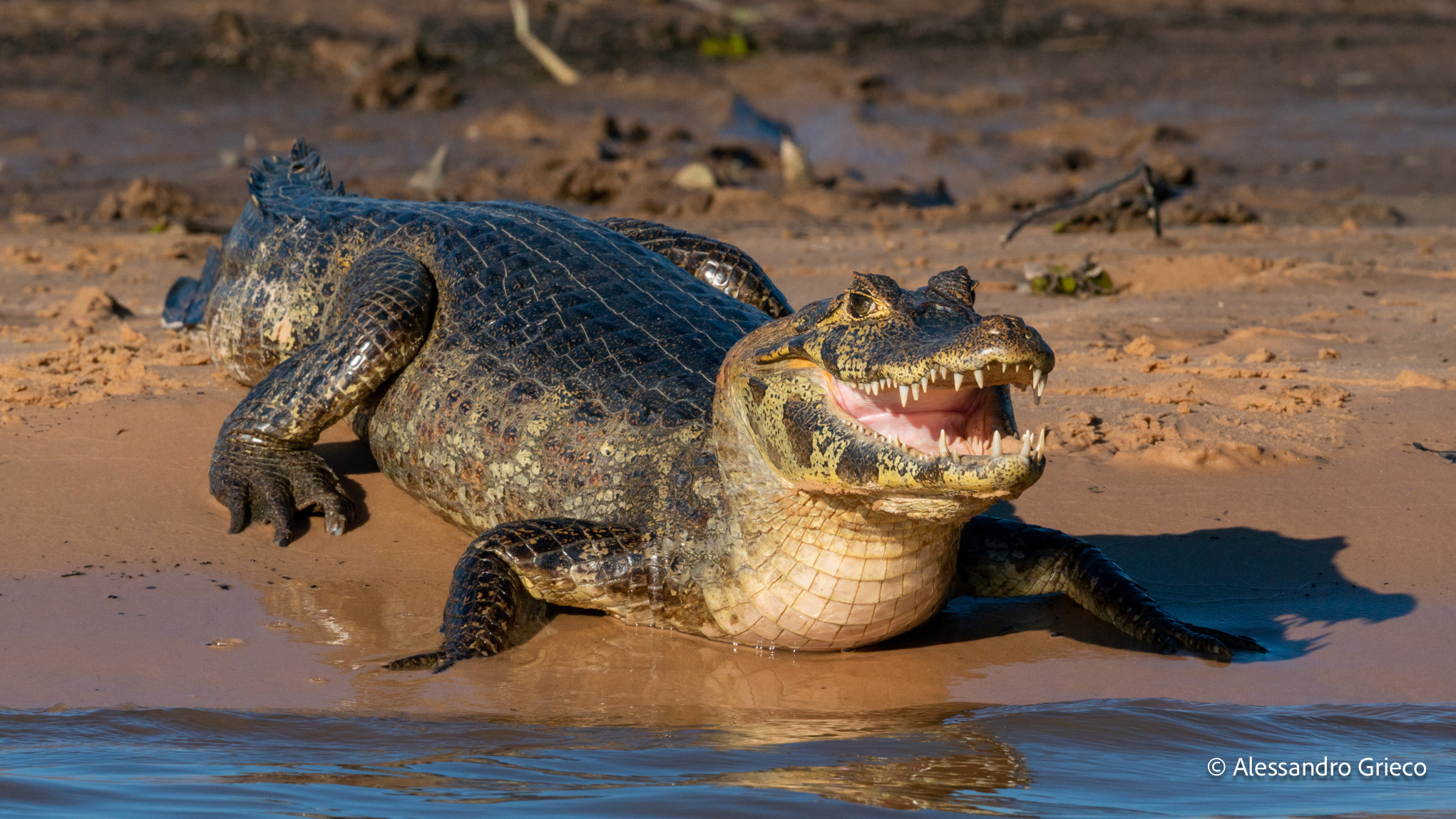
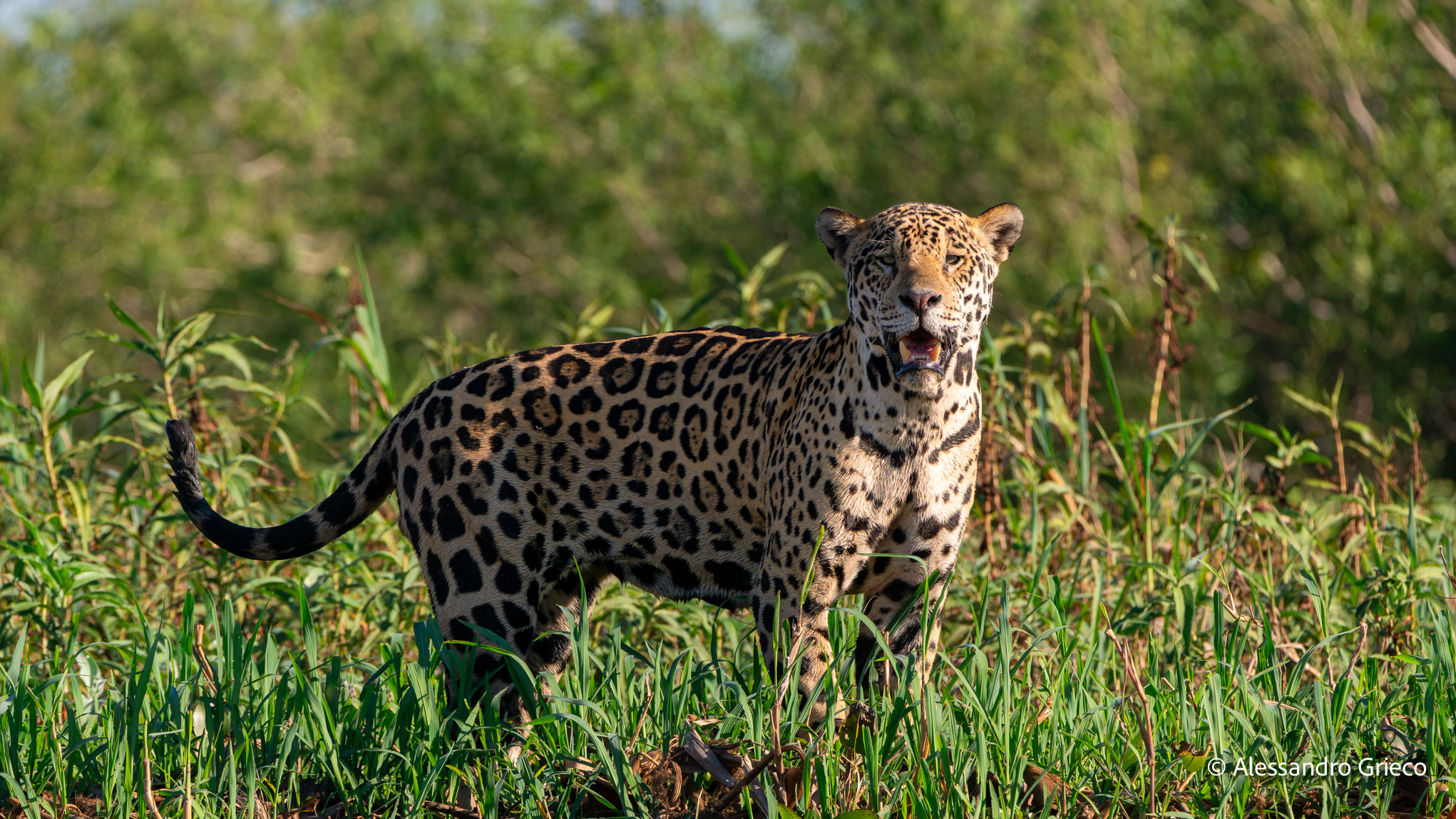
First the vegetation moves without showing anything — a presence that does not yet declare itself. Then the gaze. And only then the animal, in full: powerful, elegant, completely sovereign.
What stays with me is not only the jaguars, though nine sightings is a number I still find hard to believe. It is the accumulation — the caimans, the giant otters, the hyacinth macaws crossing the sky in pairs, the heat, the smell of the river, the sheer abundance of a place that simply has not been emptied out yet, the way so much of the world has been. A richness of life, and a specificity of fauna and flora, that leave this place carved into memory.