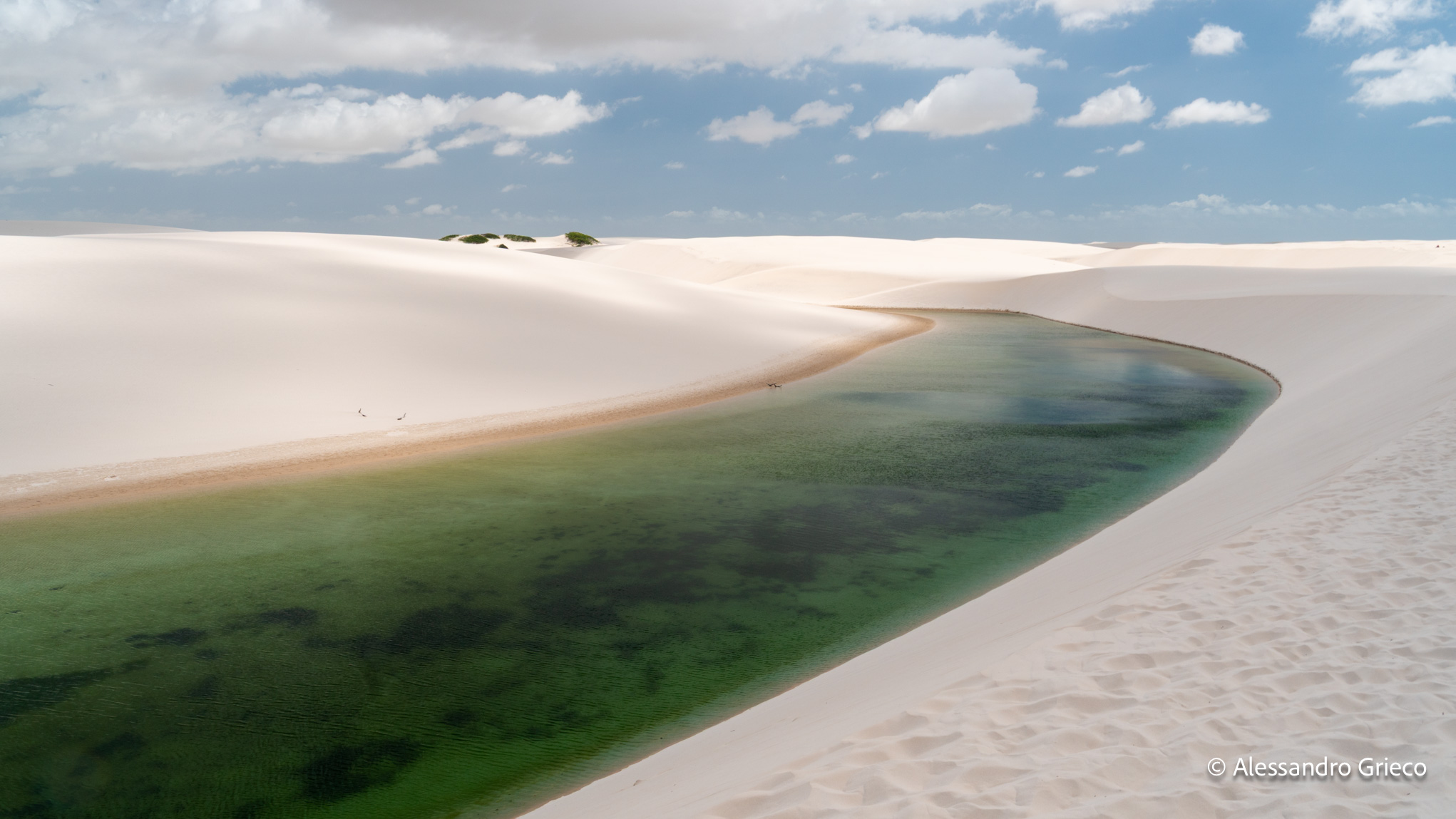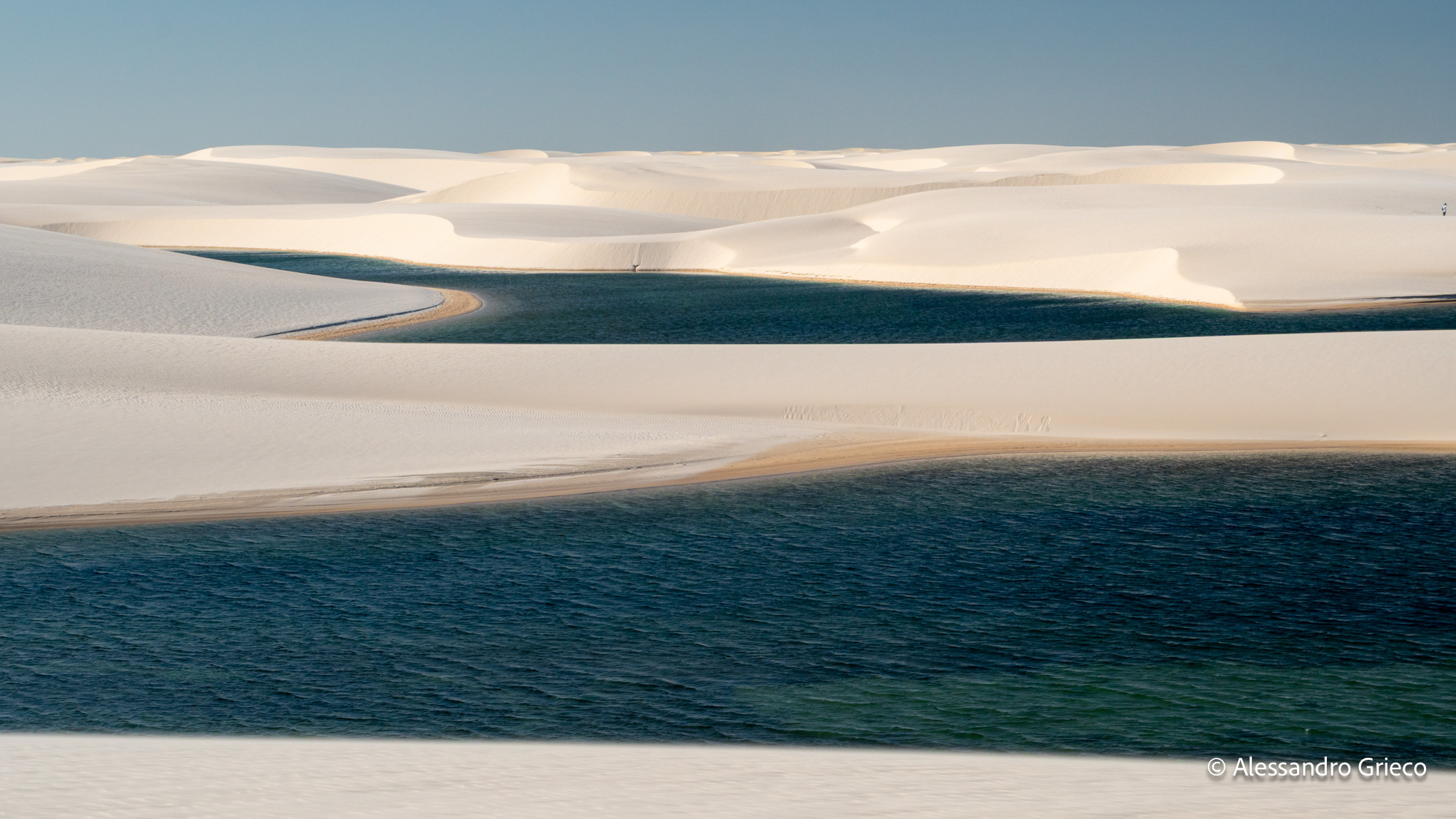
There are landscapes you understand better the more you look at them. The Lençóis Maranhenses is the opposite. It is a surreal sight from the first moment — colours so other, so extraterrestrial, so close to a vision of paradise: a pure white, and a turquoise, and the occasional emerald that divides the two along a single thin line. Geometries painted by the caresses of the air, kept light and poetic and delicate precisely because of the gentleness of the hand that arranges them. And then, when you learn how it forms, none of it becomes more comprehensible. If anything, the more you understand, the more impossible the whole thing seems.
Here is what is happening, and it does not help. The white sand is not from here at all: two rivers carry thousands of tons of sediment out of the interior of the continent toward the Atlantic, and then the equatorial winds blow it back inland, sometimes tens of kilometres, piling it into dunes that look, from above, like white bedsheets hung out to dry — which is exactly what lençóis means. Then, for half the year, the rain comes, and because a layer of impermeable rock sits just beneath the sand, the water cannot drain away. It pools. Thousands upon thousands of crystalline lagoons appear in the valleys between the dunes — a turquoise mosaic laid across the white, present for only a few months before the sun takes them back.
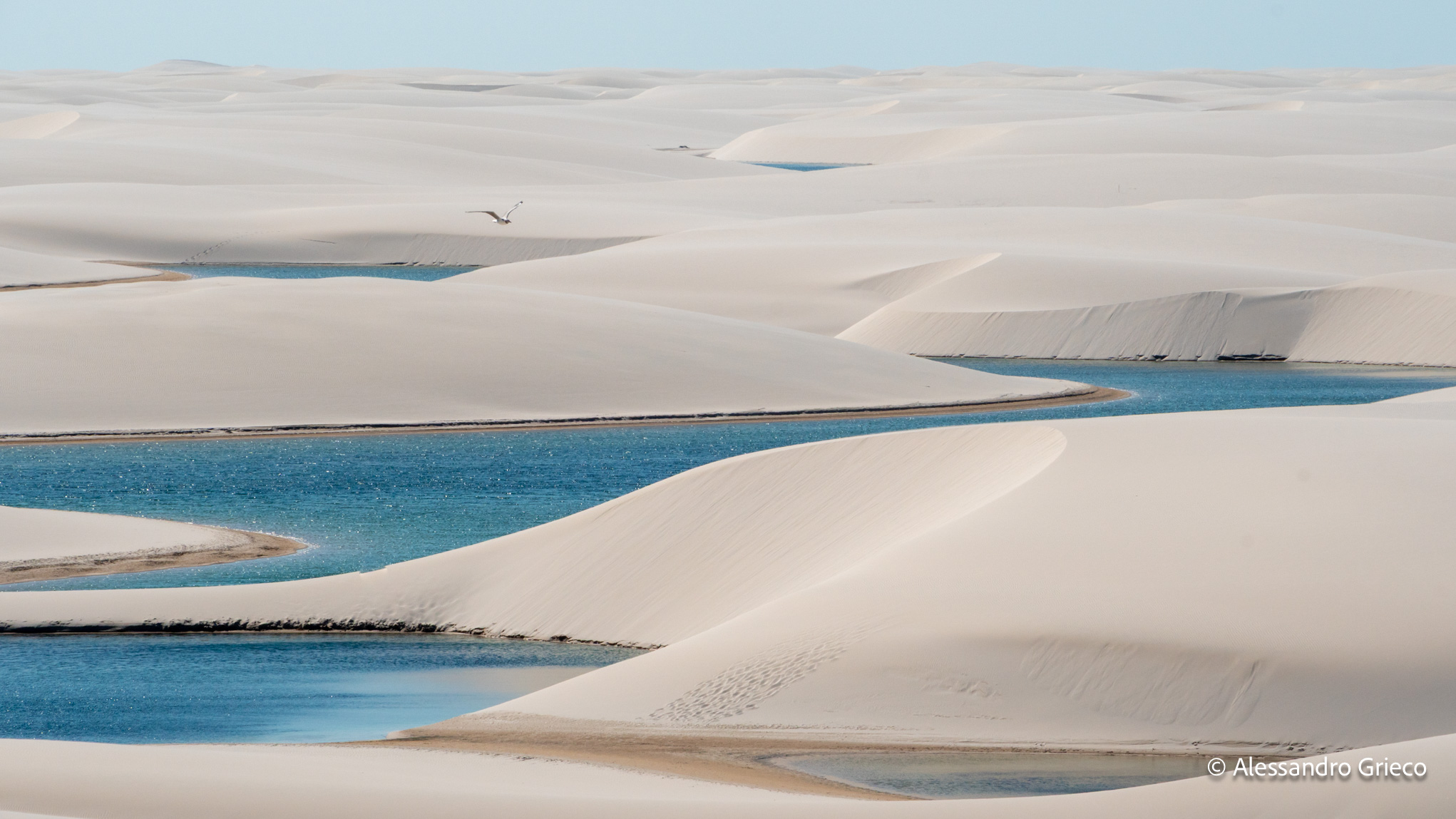
And then the deepest mystery of all: there are fish in the lagoons. Lagoons that did not exist a few weeks earlier, in the middle of a sand desert, far from any permanent water — and they are full of fish. Part of the answer is migration: at their fullest, the lagoons connect to rivers that cut through the dunes, and fish swim in. But part of it is stranger. Some species, like the wolf fish, survive the dry season buried in the damp mud beneath the vanished water, dormant, waiting — and others lay their eggs in the dry sand, so that when the rains return, the eggs hatch and a whole population simply begins again, out of what looked like nothing.
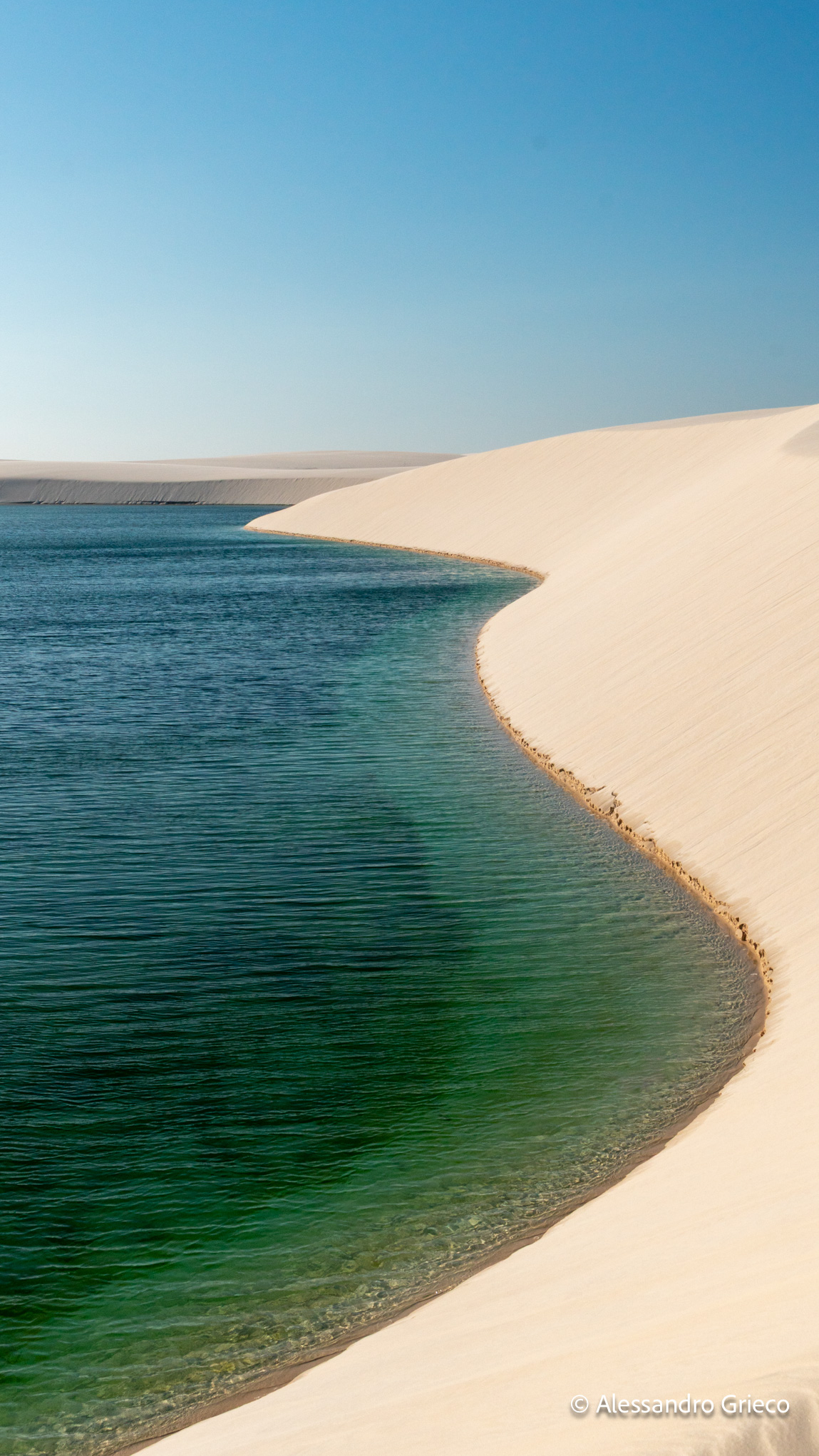
You walk into this the way you walk into a painting. You climb a white dune and the next valley holds a lagoon the colour of a stone you do not have a name for, and the one after that holds another, and another, to the horizon. There is no fauna to wait for here, no animal to appear from the vegetation — there is no vegetation. There is only the landscape itself, in its most delicate register: the quiet, poetic, almost unbearable softness of natural beauty with nothing else competing for your attention. It is the gentlest place I have ever stood inside.
Colours so other, so close to paradise — you do not look at this landscape so much as walk inside a painting.