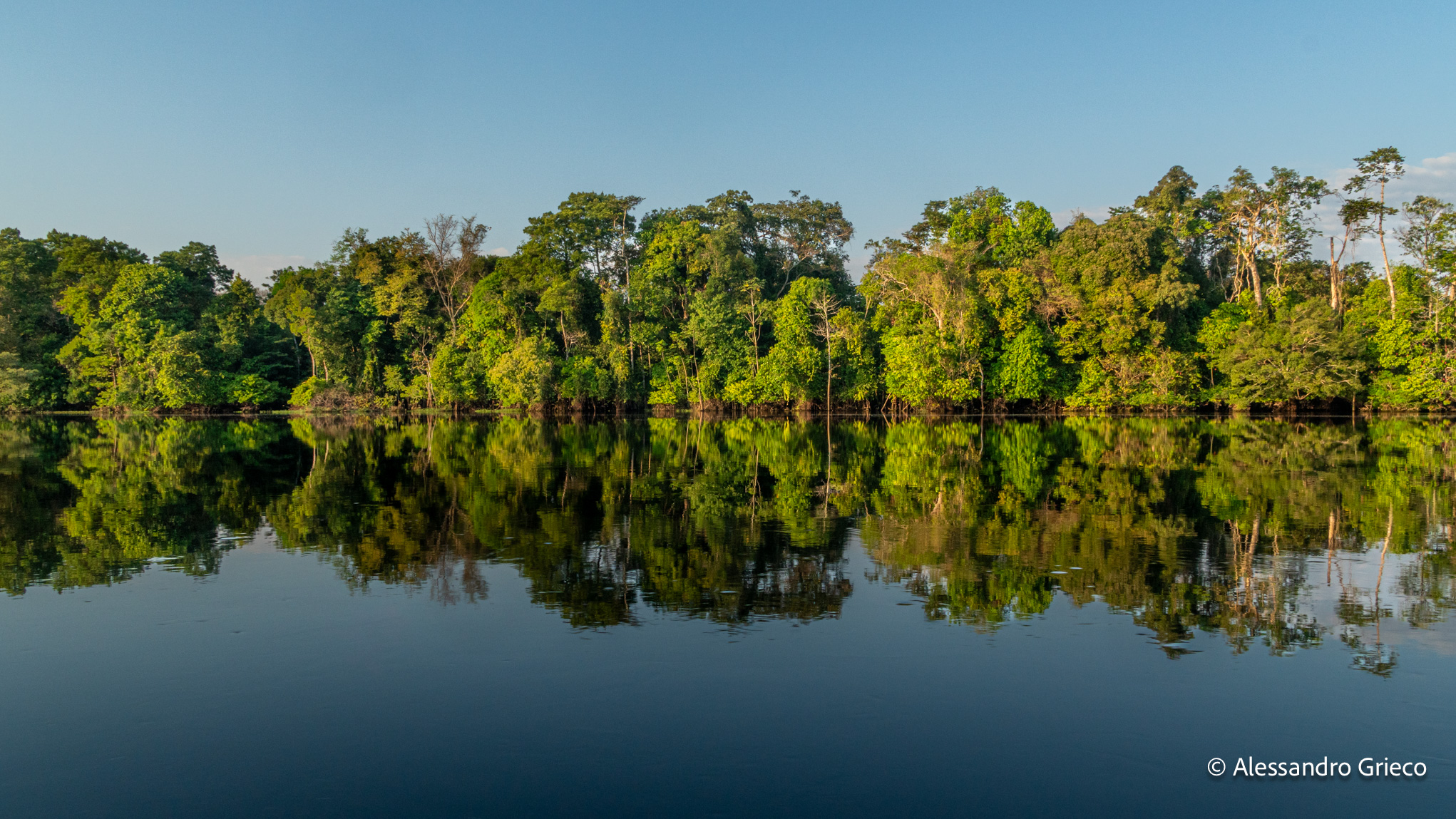
To describe the Amazon fully takes more than one life — the richest ecosystem, the vastest forest, the highest concentration of living species on earth. Visiting it means touching one of the wildest places that still exists, while understanding, almost immediately, that what you will see in a lifetime is only the smallest part of what is there. At the heart of it, enclosed between the Rio Solimões and the Auati-Paraná, there is a place even more special: a flooded forest where the rivers rise twelve metres with each season, submerging the trees to their crowns — the Mamirauá Reserve, a UNESCO heritage site of thirty-five thousand square kilometres, where the water is both the threat and the life of everything inside it.
We woke before sunrise each day, and before we moved or spoke the forest was already speaking: a boiling of voices, an intense welcome to the new day, dominated by the howler monkeys marking their territories and their harems in the dark. When the light came through, it did something to the water we had not expected. The rivers here are so still, and so clear, and so flat, that the whole canopy above is reflected perfectly below — trees doubled, sky doubled, a bird crossing the gap doubled — and canoeing between them feels like sliding across ice, following the symmetric images of vegetation mirrored underneath you, the forest given back twice.
Canoeing on the rivers sounds like sliding on ice — the forest mirrored underneath you, given back twice.
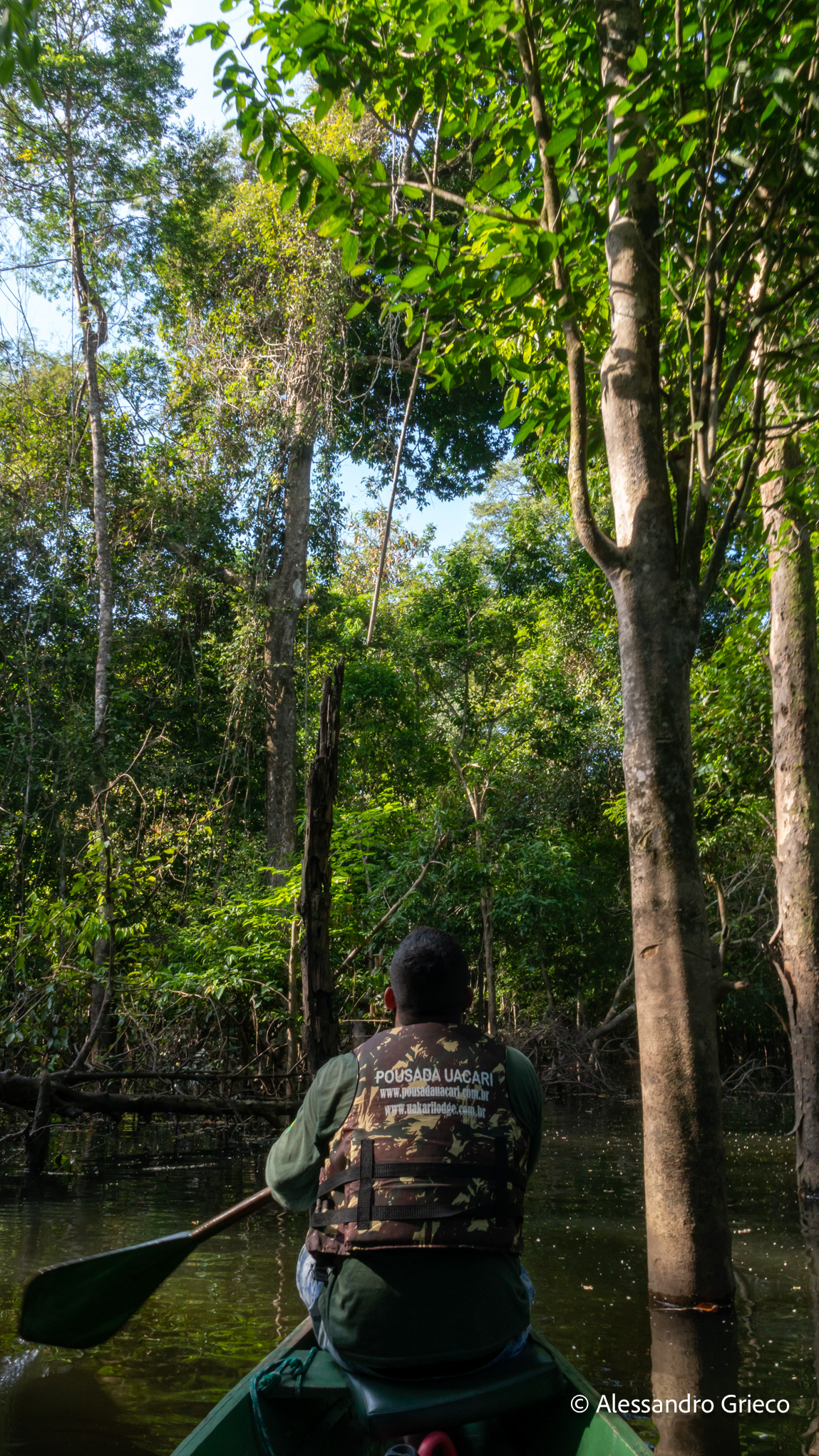
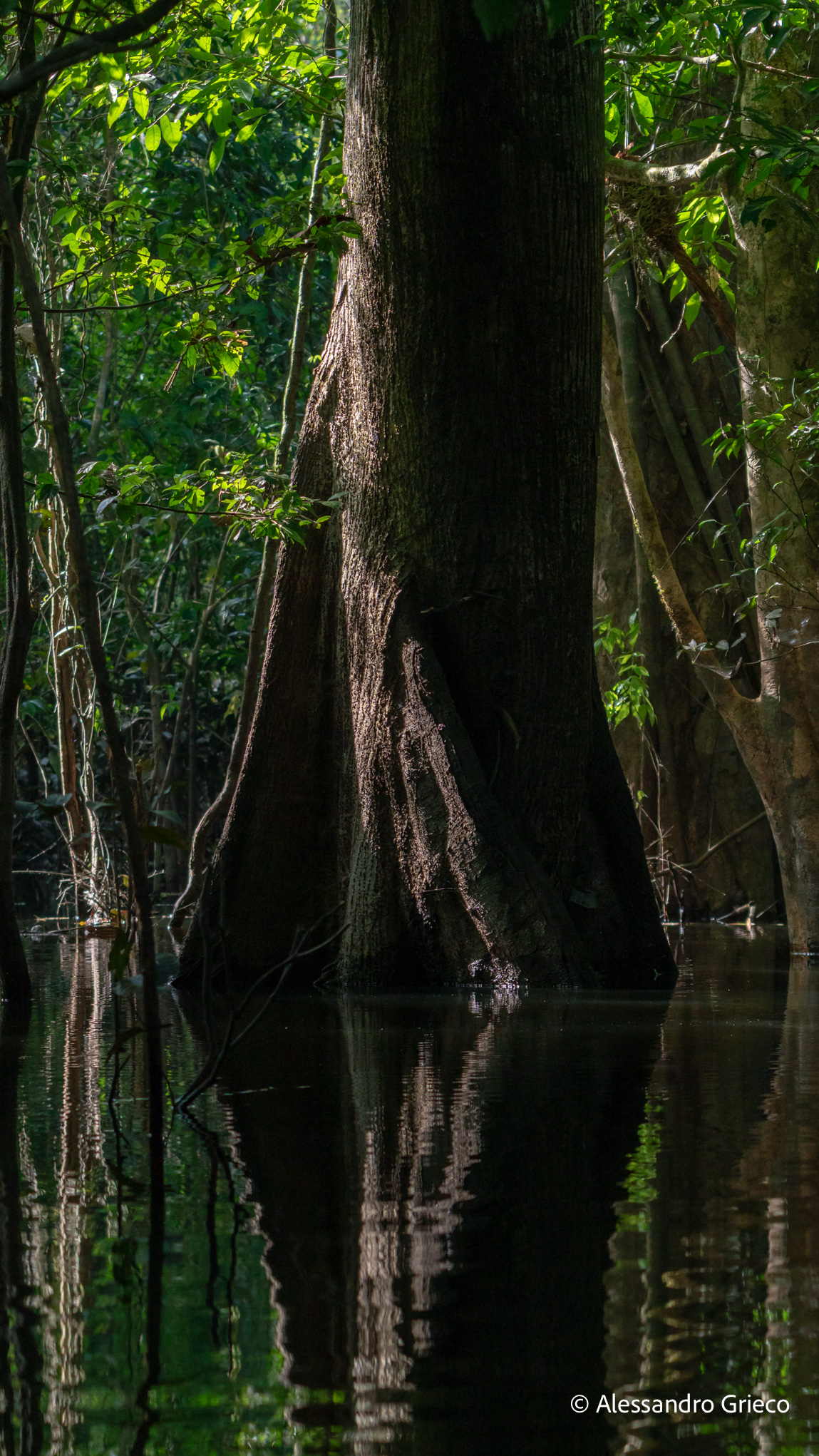
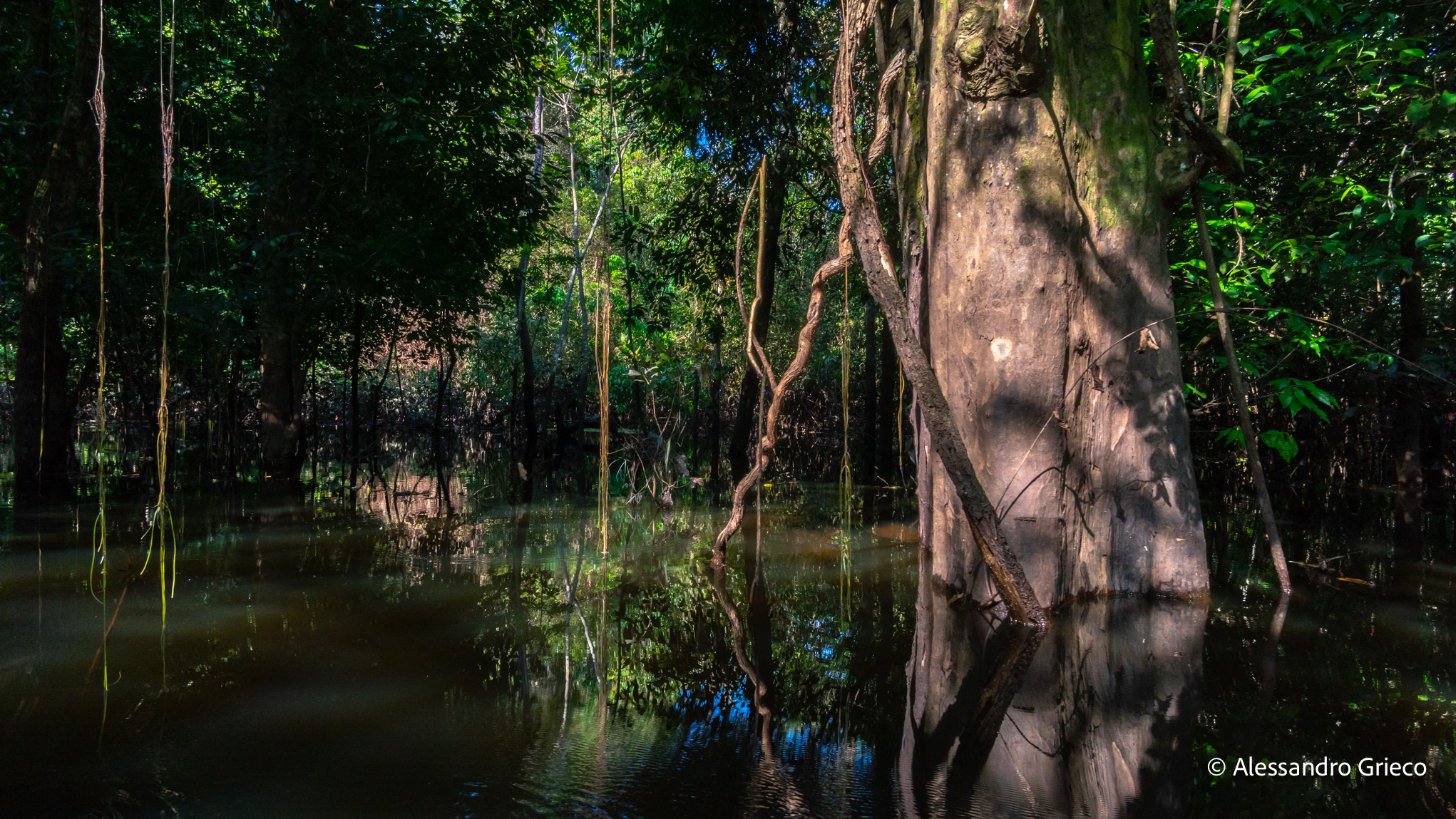
Every morning we left the open river on a traditional wooden canoe with a local guide and pushed deep into the trees. The transition is immediate and total: the light drops, the air thickens, the sounds change. You do not look at the forest from the outside any more — you are inside it, touching trunks that have been standing for centuries from the side of the boat, smelling the rot and the green of it, catching shapes moving through branches far above. The caiman sometimes surfaced alongside us without hurry, barely a ripple, aware of exactly where we were. Ask your guide to make the sound of a baby caiman and the whole river will answer — and you will discover you have been surrounded for some time.
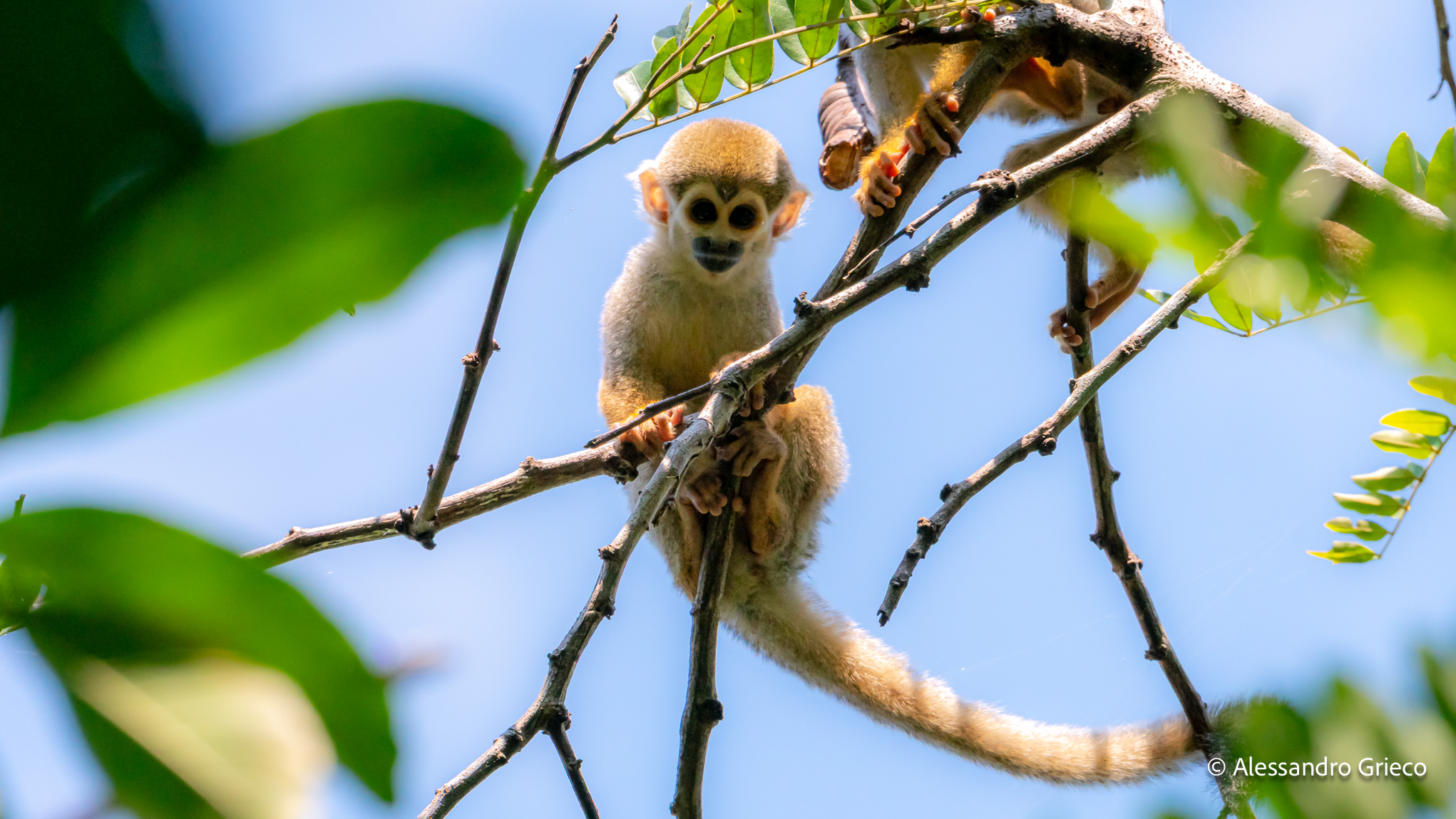
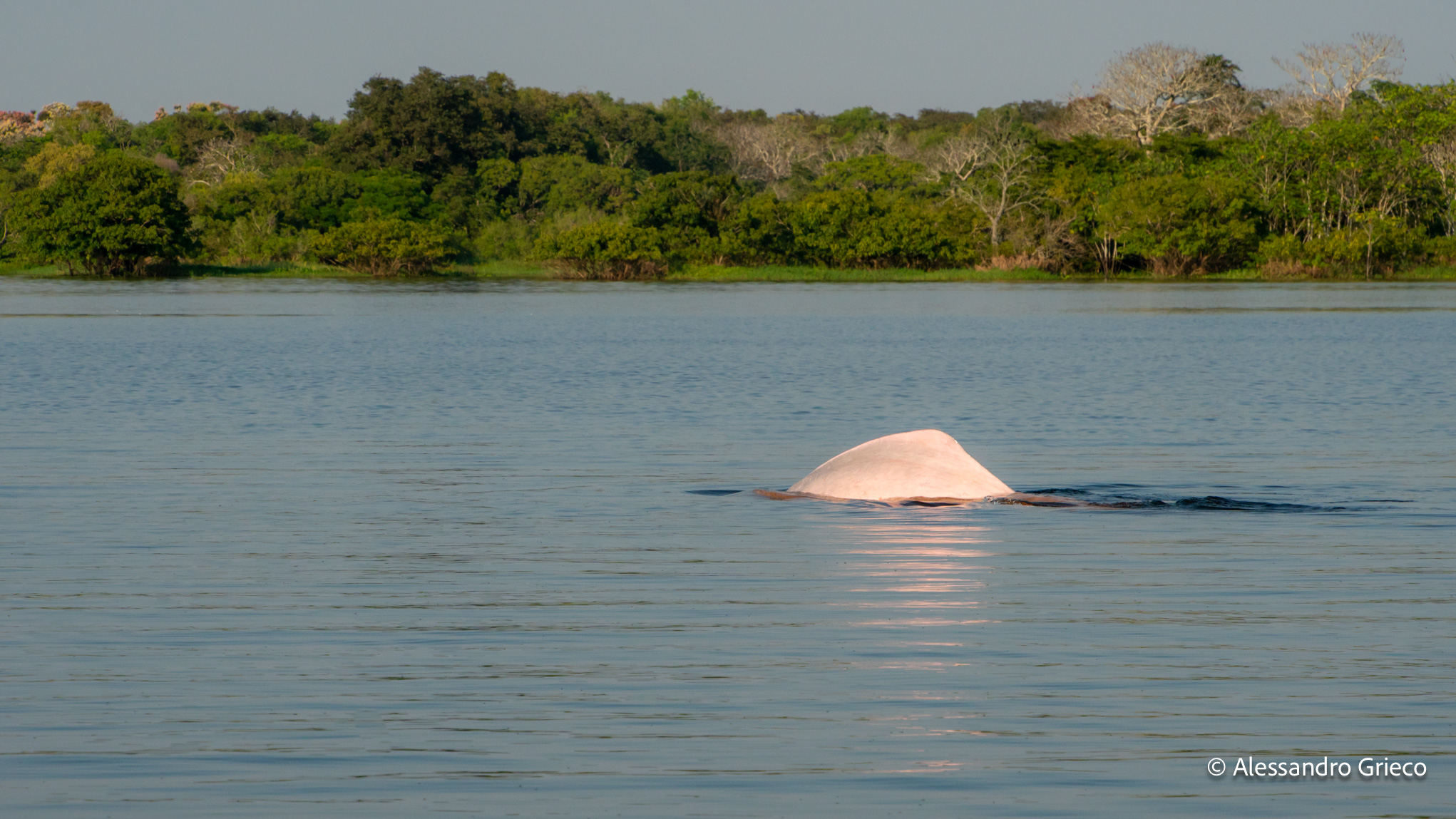
The wildlife accumulates until it starts to feel implausible. The white uakari — found nowhere else on earth, with the bare red face that Walter Bates, the great Victorian naturalist, once called "the most grotesque appearance" — is one of the more arresting things I have ever had looking back at me from a branch. Capuchin monkeys, saki, black spider monkeys. And then the river itself: the boto, the pink river dolphin, surfacing with that peculiar washed-out coral colour that makes it look less like a real animal than something dreamed up by someone who had never actually seen the sea.
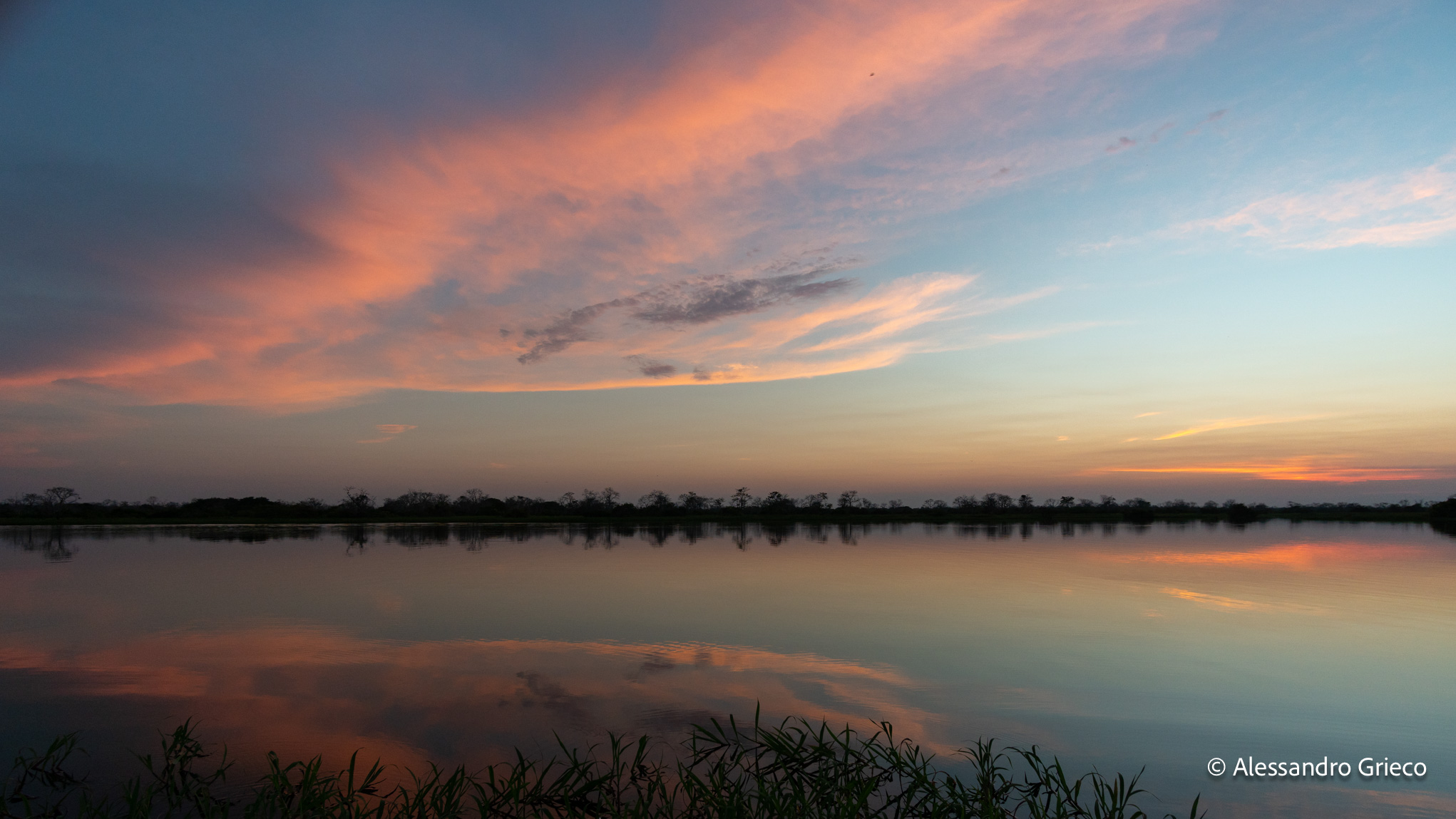
The Mamirauá lake is where everything opens out. Past the narrow rivers and the cathedral dark of the trees, the lake is wide and bright and the sky above it is enormous. We stayed the whole day and then until the sunset — the sunset in the Amazon exhausting the entire spectrum, red and orange and yellow in sequence, colours too strong to be entirely plausible, mirrored perfectly in the flat water so that the strip of vegetation at the horizon is the only border between the sky above and the sky below. We stood there until the light was gone, not saying much, because anything we might have said would have been smaller than what we were looking at.
That night, lying in our floating bungalow surrounded by the breath of the forest — constant, alive, full — there was a moment of something I am not entirely able to put into words. In Italian there is a word for it: panismo. The dissolution of the border between the self and the place. The Amazon is too large to hold in the mind as a concept. But you can feel it, at night, from inside it — and that feeling is what this kind of travel is really for.