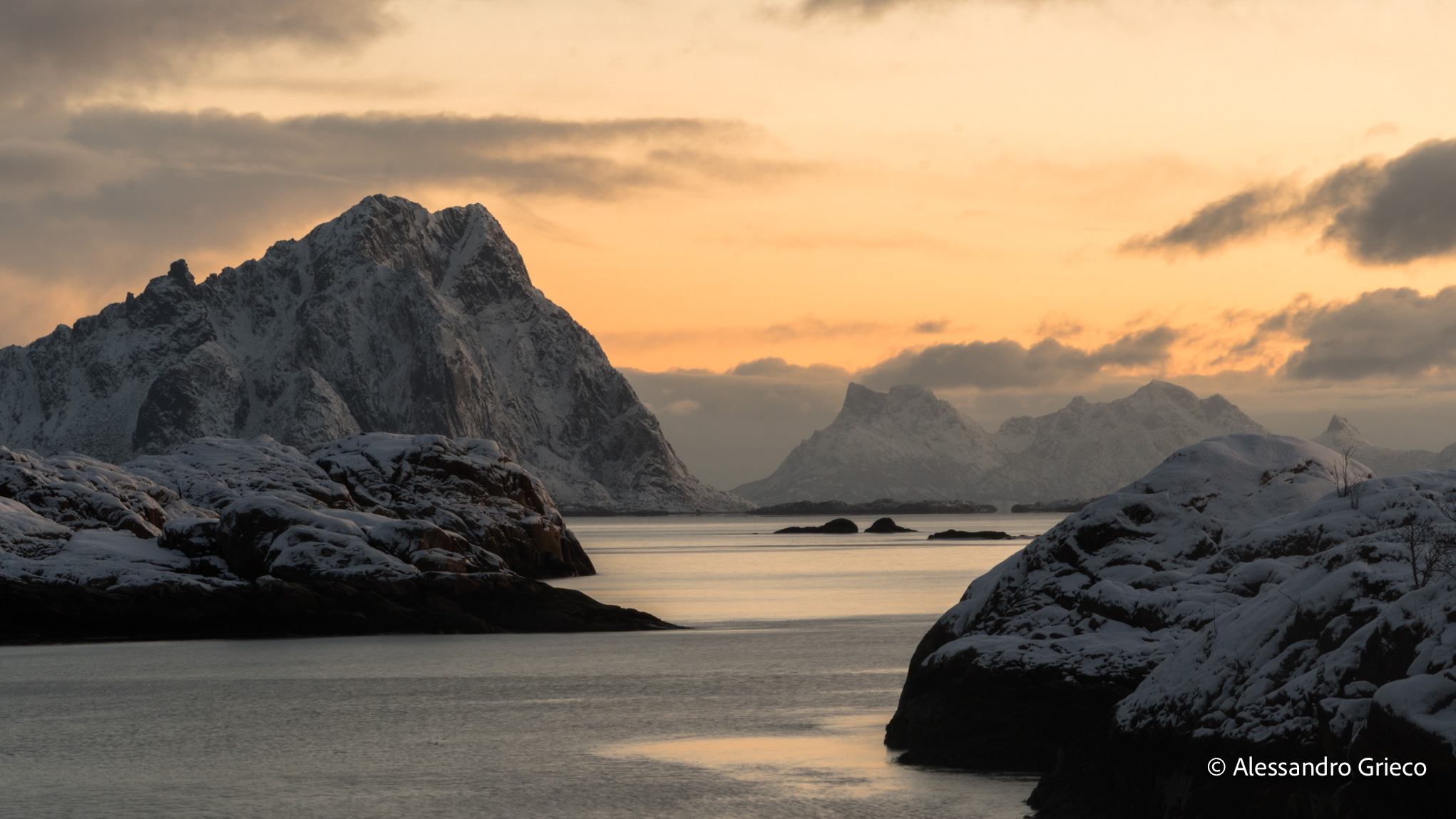
During the two weeks of the arctic night, at noon, the sun tries in vain to overcome the horizon. Sunrise and sunset — the beginning and the end of the day — merge their colours into a single long golden event, and everything between them is light of a kind you do not find elsewhere on earth. Spiky, snow-covered mountains scatter across a flat, dense, silent sea between the islands; the sky and their reflections compete for the same space. The labyrinthine inlets chase each other through long fjords, and the placid glacial water mirrors and multiplies every shape, every colour, every landscape it receives — as if the beauty of these places was not enough, and the sea decided to say it twice.
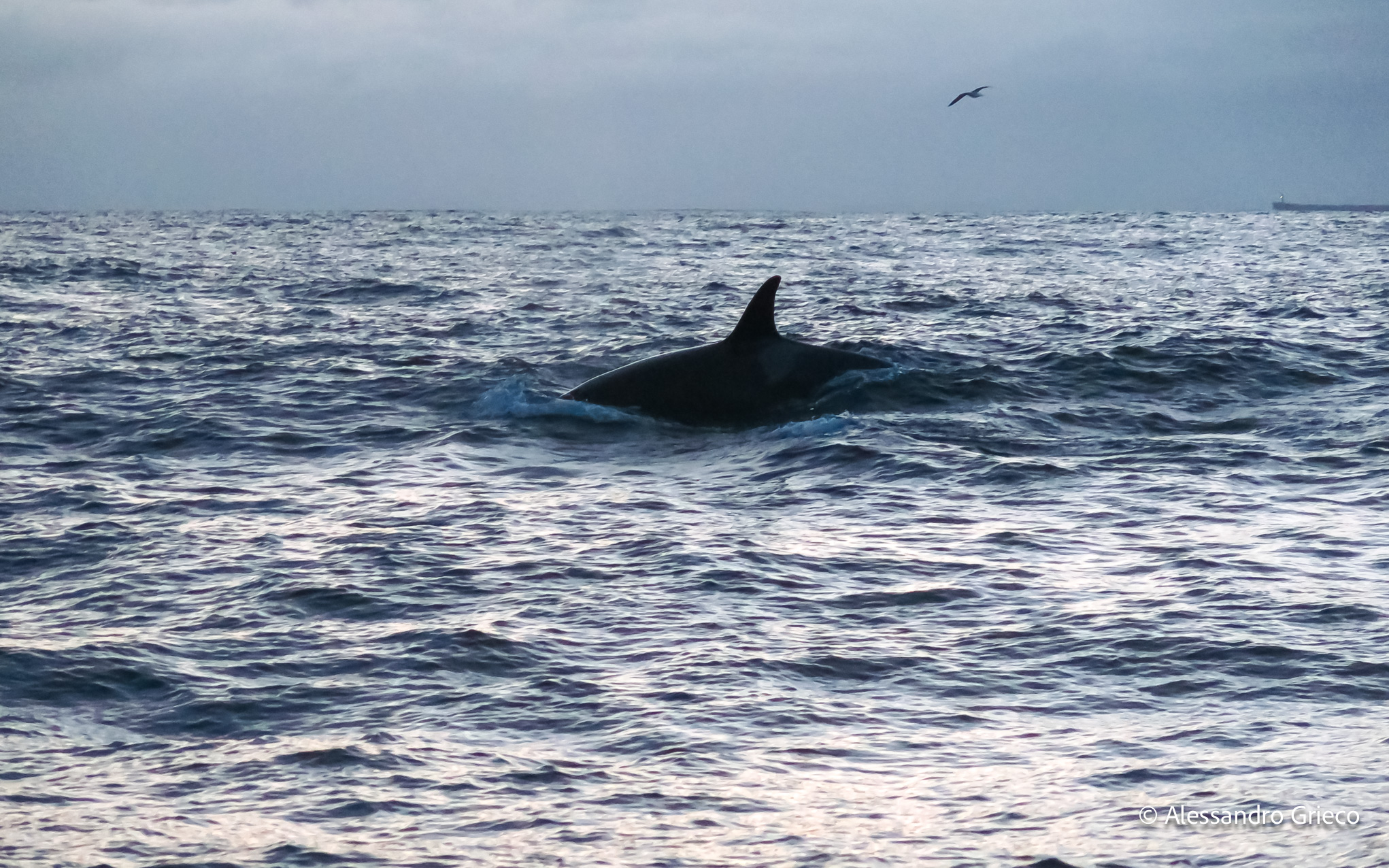
We had come for the orcas. In winter, killer whale pods follow the herring into the fjords off Andøya — the northernmost point of the archipelago, the open door to the north Atlantic — and for a few weeks each year the water here holds the largest concentration of orcas on earth. We went out on a RIB in the open sea, dressed in thick neoprene drysuits, into cold grey water under a sky the colour of pewter. When the guide found the pod — adult females, a few calves, a male with a dorsal fin so tall it looked architectural — he said quietly to enter the water. I remember not thinking about the cold. The orcas were working the herring school below us, moving fast, their breath loud in the silence. Their strength, their curiosity, their beauty — and at one point a large female turned and looked directly at me with an eye as intelligent as any I have ever faced, before going back to her work.
Their strength, their breath, their curiosity, their beauty — a pod of killer whales feeding in a grey Arctic sea, and the strange privilege of being, for a moment, in the water with them.
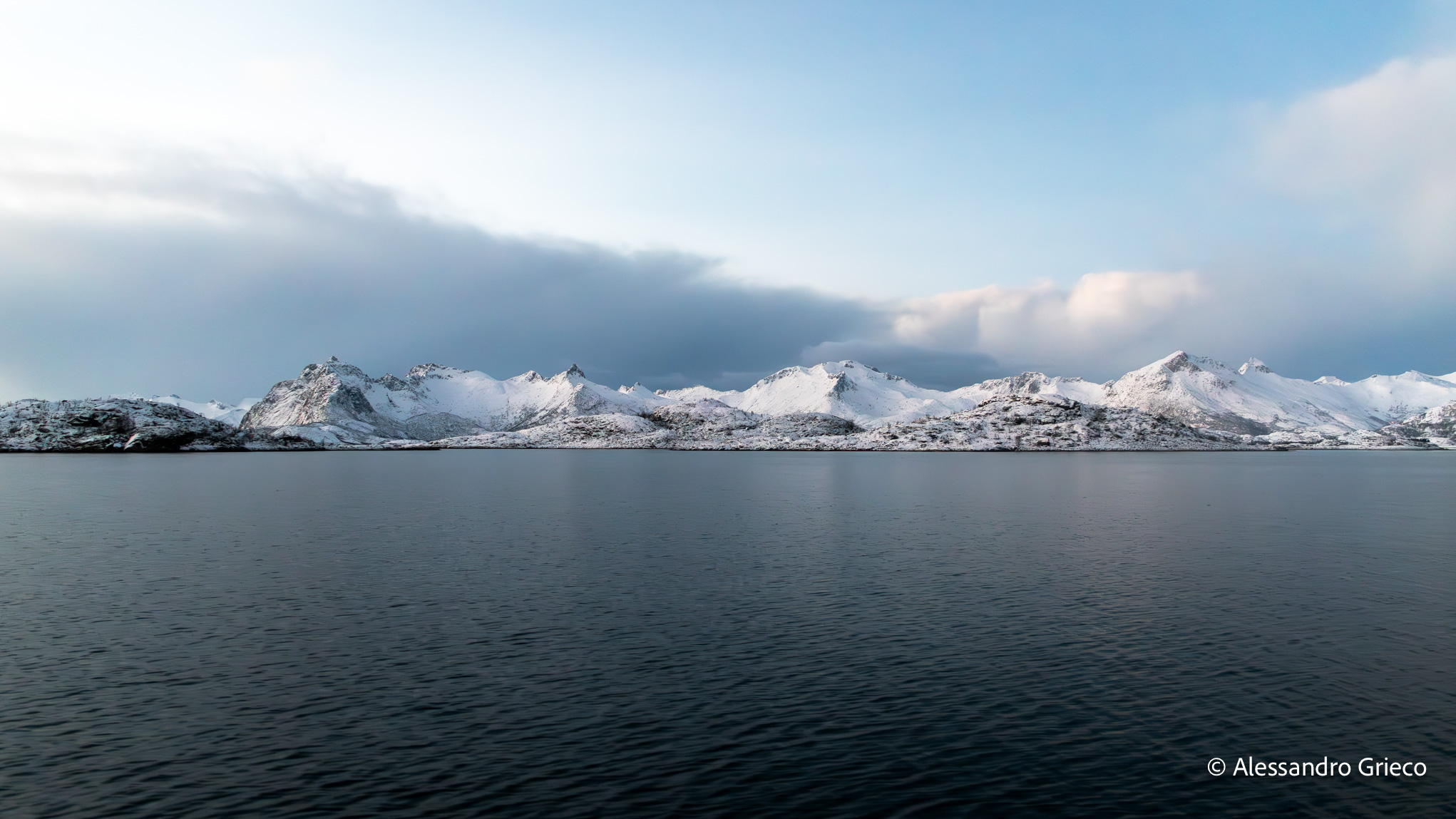
The rest of Lofoten is Svolvær — the main town, the starting point, the place to orient yourself before the E10 takes you south island by island along the most scenic road I have ever driven. We stayed in a rorbu: the red-and-white wooden fishermen's cabins built directly over the water, some centuries old, most now converted into something warm and quietly romantic. You wake up on the wooden floor, open the window, and a fjord is directly outside. There is nothing to prepare you for that. The best day was on the water — the boat into Trollfjord, a narrow rocky throat of a canyon with mountains on both sides so steep and close they seem to be negotiating with each other for the sky, the water below painted blue and pink and red in the colours the sun throws from just below the horizon. Sea eagles work the same channel; they have learned the boats.
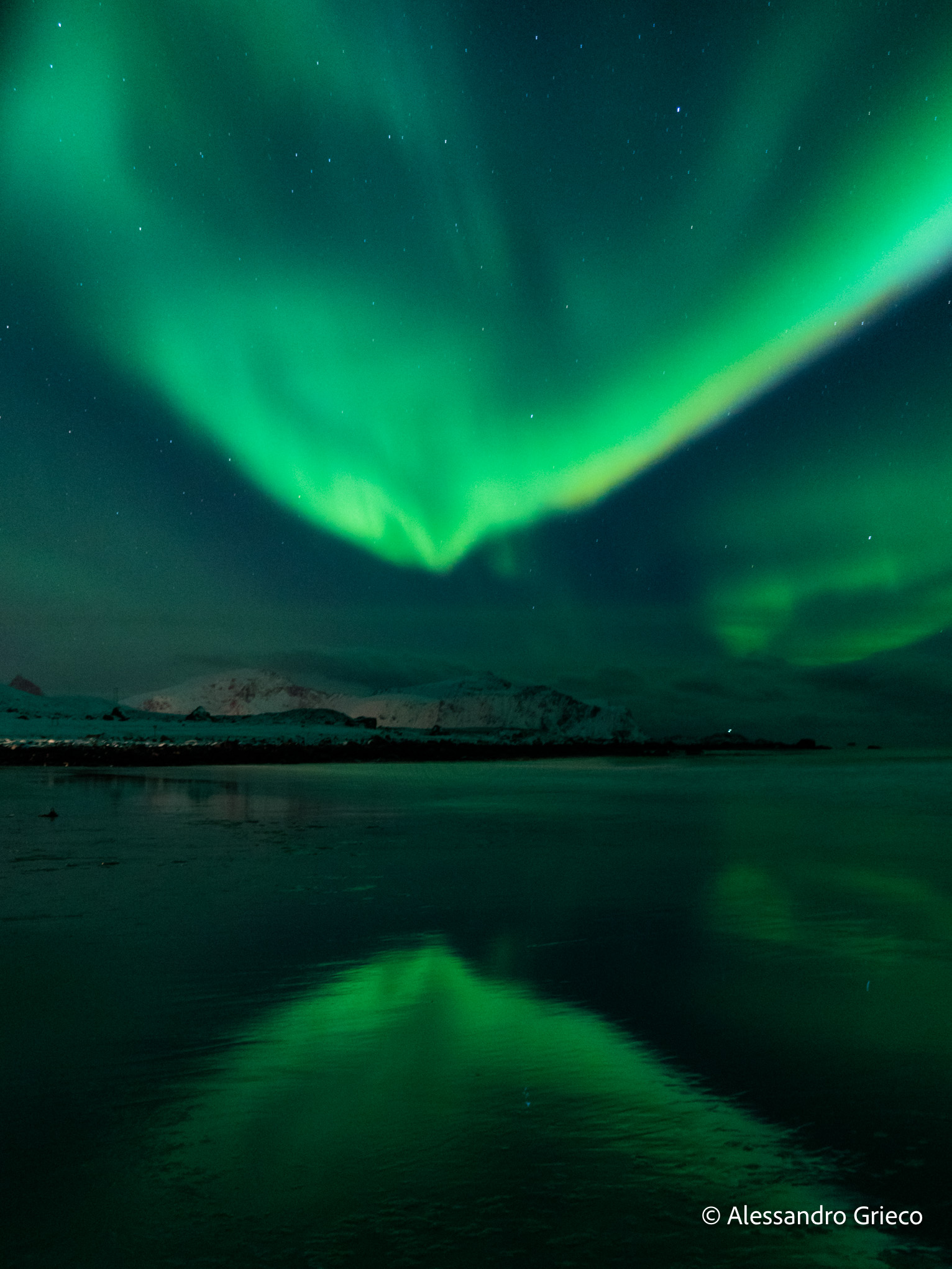
The northern lights are different in Lofoten than anywhere else I have seen them because the landscape frames them properly. At Skagsanden beach the sand freezes in winter, and the frozen sand mirrors the sky — so the aurora above you and the aurora below you are the same event, and you are standing in the middle of it. The green aurora is the most common, but in two weeks I watched the pink and white aurora at least twice, the whole bay lit up in colours that have no right to exist at that latitude, doubling in the flat frozen mirror below until the sky and the ground become indistinguishable and the only human-scale thing left is the person standing next to you.
What I carried home from Lofoten is not any single image but a quality of light I have not found anywhere since. For the two weeks of the arctic night the sun never clears the horizon — it surfaces in the south around nine in the morning, moves along the edge of the sky with enormous slowness, and slips back below around half past three in the afternoon. The whole day is a perpetual golden hour. Everything it touches — rock, water, snow, a red wooden cabin, the dorsal fin of a killer whale — it touches with the quality of something ending or beginning, and you can never quite tell which. I think that is precisely the point.