After days in Tokyo — a city where it is genuinely difficult to find a single tree or a patch of grass — and three and a half hours on a train so fast the landscape becomes abstract, an unbroken wall of narrow buildings stacked against narrow buildings with no natural corner anywhere in it, you finally reach the mountains. And you breathe. Nagano in March is beautiful in its own right, snow still deep on the peaks, the air thin and clean after the density of the capital. You rise before dawn to reach the monkeys.
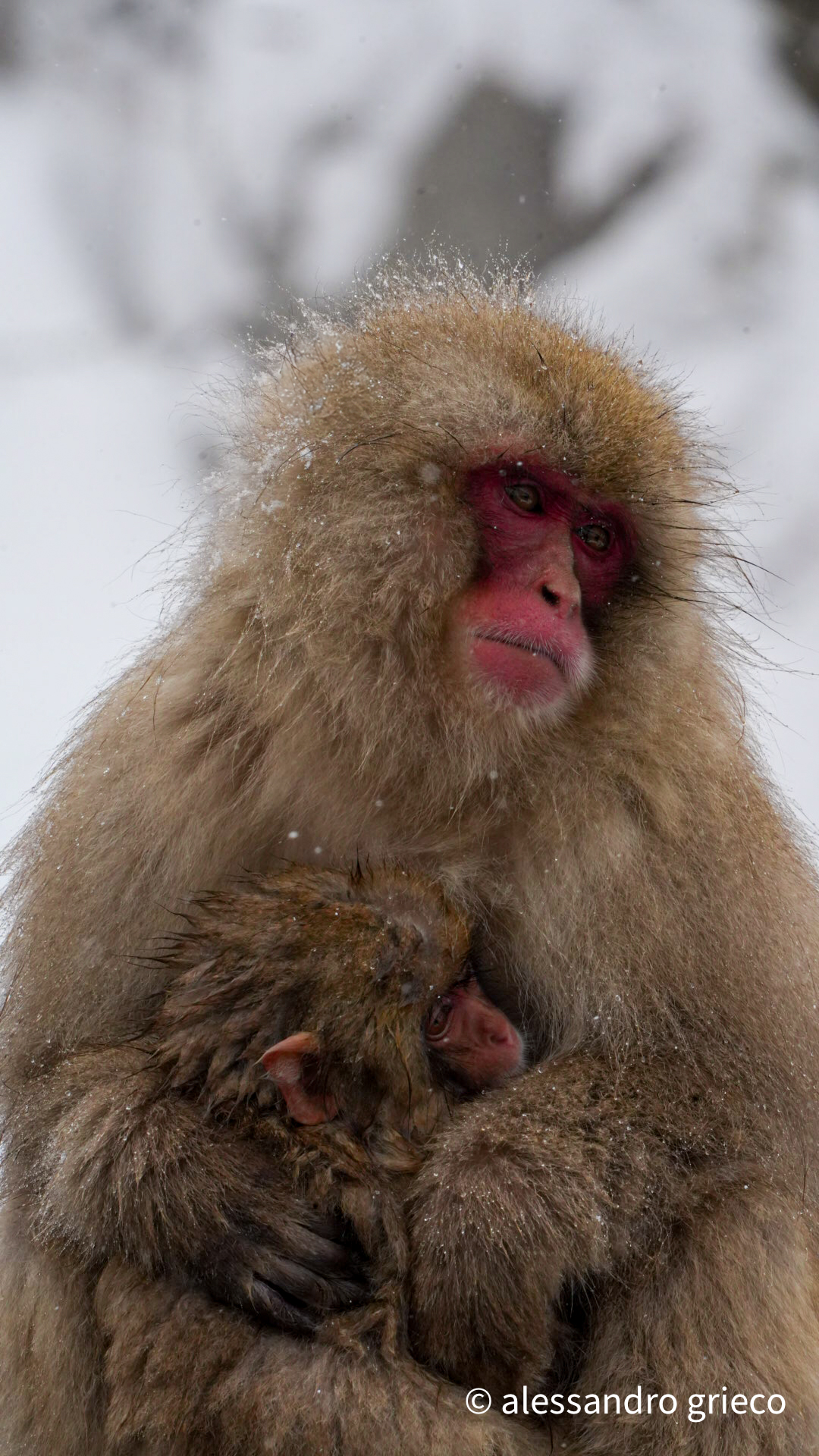
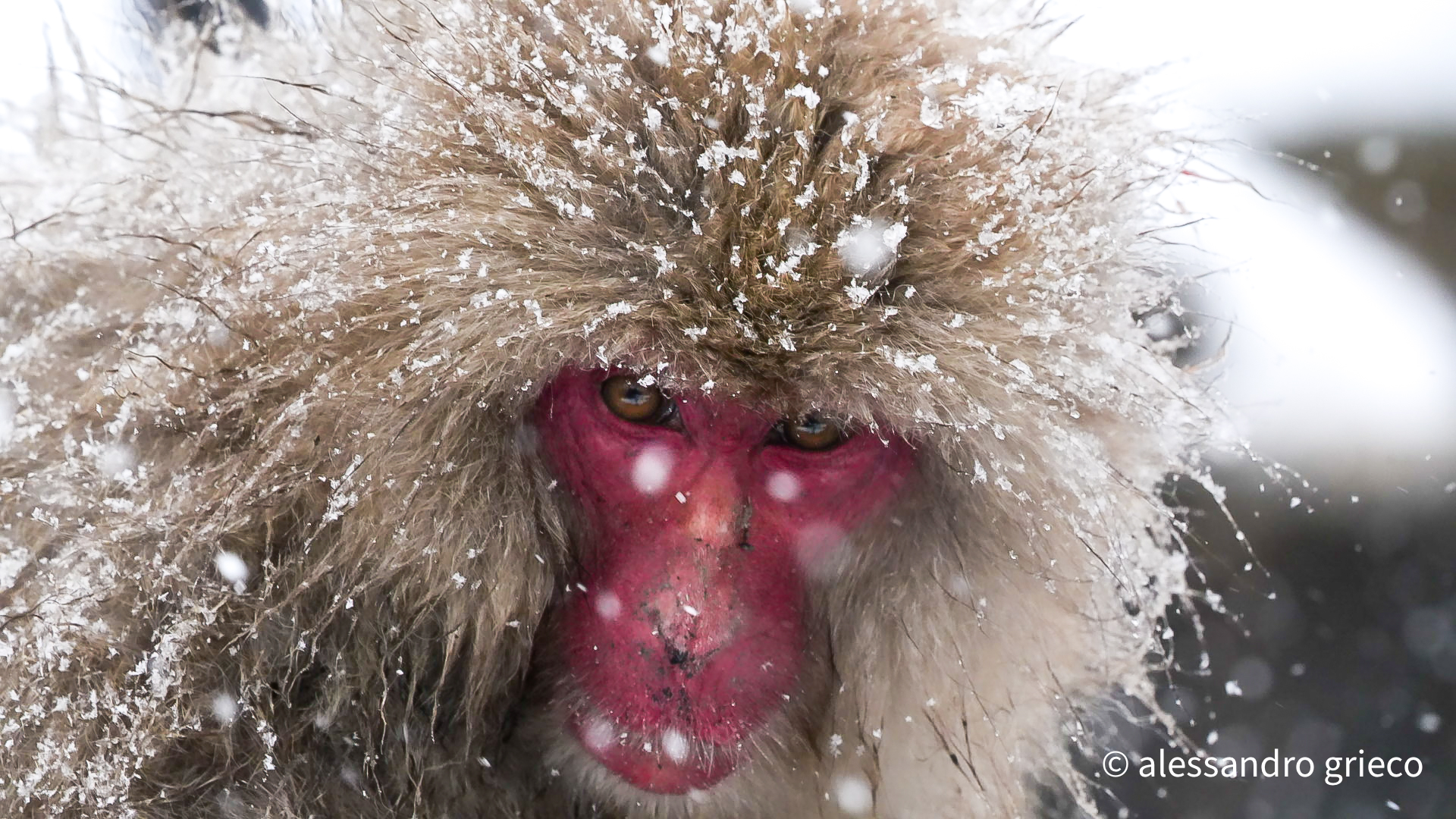
The place is remote, reached by bus or car to a freezing trailhead deep in snow, the temperature brutally low. But there is no point despairing at the cold, because you are not there yet — you still have to walk. The trail climbs for a little over an hour through a forest of conifers, and every so often the wind brings down a small avalanche of snow from the branches overhead, a soft collapse and then silence again. At the top, at the end of the valley, there is a small museum dedicated to the monkeys that doubles as a refuge — a place to literally thaw out — and beyond it a bridge. The view itself is nothing special. But this is where the macaques finally appear: small, ruffled, thick-furred, walking and running through the snow and the freezing air as if the cold simply did not touch them. Sometimes one sits down in the snow and relaxes, and you wonder how it does not freeze. They are active, playful, occasionally quarrelsome. And then you reach the small thermal pool, and the macaques become many.
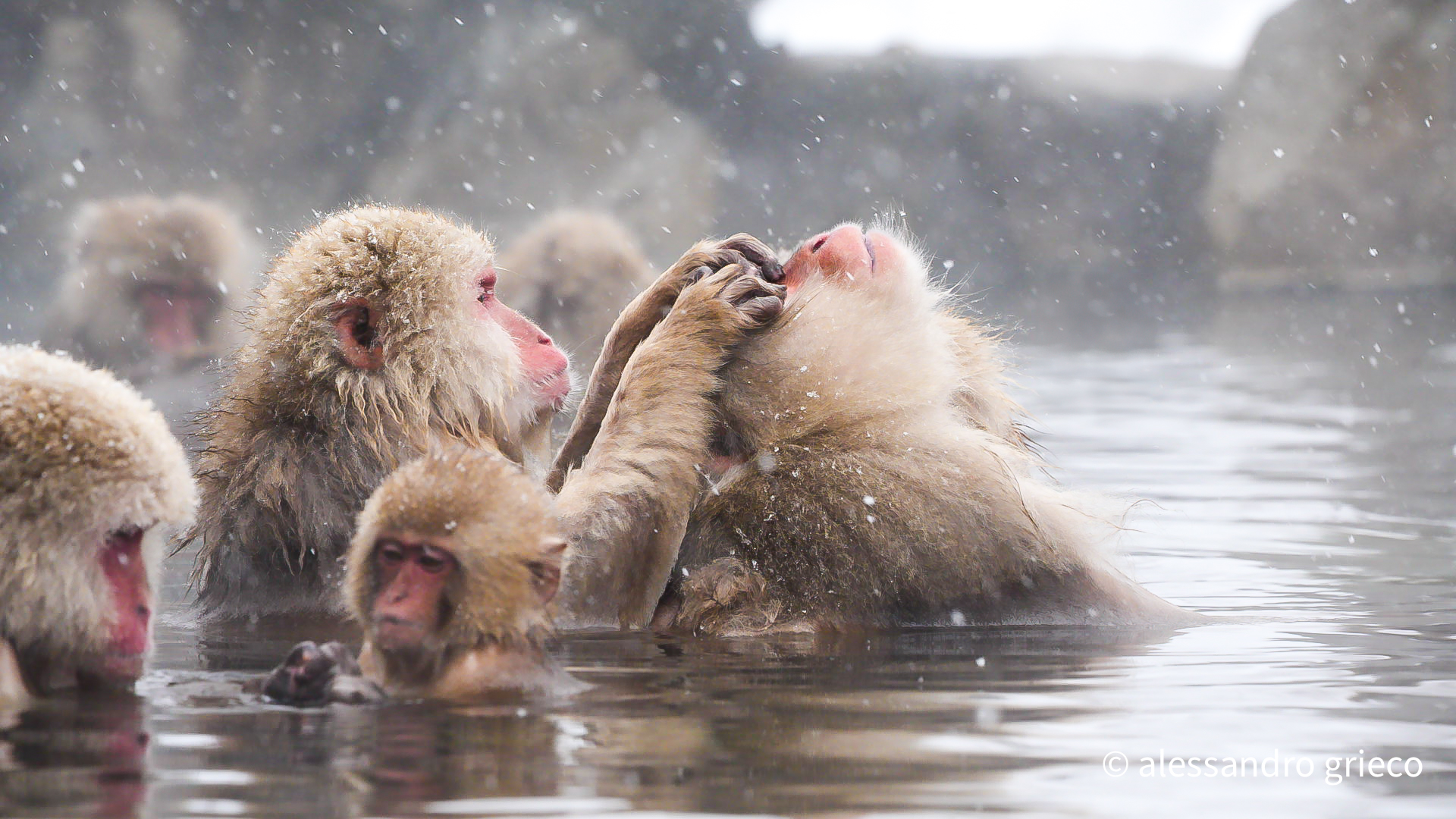
The troop holds every age. There are big, dishevelled males with thick, vaporous fur, and a great many wildly energetic infants who play in the water, leaping onto one another, splashing, pushing each other under. But the most absorbing thing is the faces — the enormous range of expression on them. One dozes gently in the warm vapour, perhaps half-attended by another picking through its fur in some social rite; one dives; the males stay apart, holding their place in the hierarchy. And all of them with facial expressions that are captivating, extraordinarily readable, startlingly human — familiar in a way you are not prepared for.
You stay for hours in the freezing air, watching, never bored, held by the curiosity and the strangeness of this surreal behaviour: so natural, and so close to our own way of relaxing in a spa. The contrast holds you — the freezing air, the steaming thermal pool, the colony so relaxed, almost indulgent, behaving in a way that looks almost urban next to ours. Your hands and feet freeze. You cannot bring yourself to give up the spectacle. Eventually you return to the museum, thaw your hands and feet, drink a free cup of tea, and walk back down through the forest.