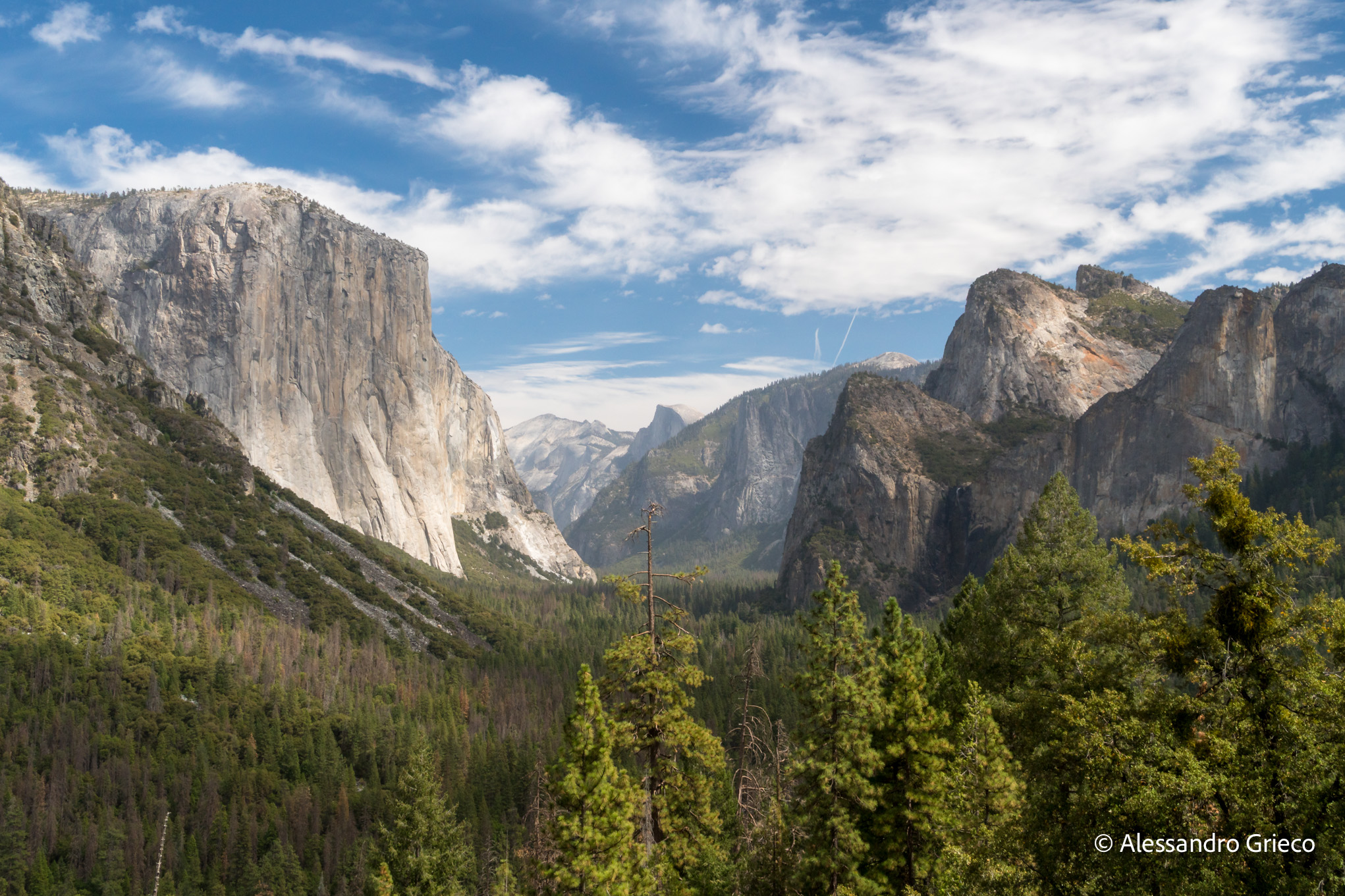
Half of America, it turns out, is red — and the other half, the half we drove into after the desert, is the deepest green I have ever stood inside. We came down out of the Sierra Nevada through a tunnel cut straight through granite, and on the other side the valley just opened, all at once, the way a held breath finally lets go: El Capitan rearing up on one side, Half Dome standing improbably square at the far end, a waterfall hanging thin and white in between, and every photograph I had ever seen of this place turned out to be true and somehow still not enough.
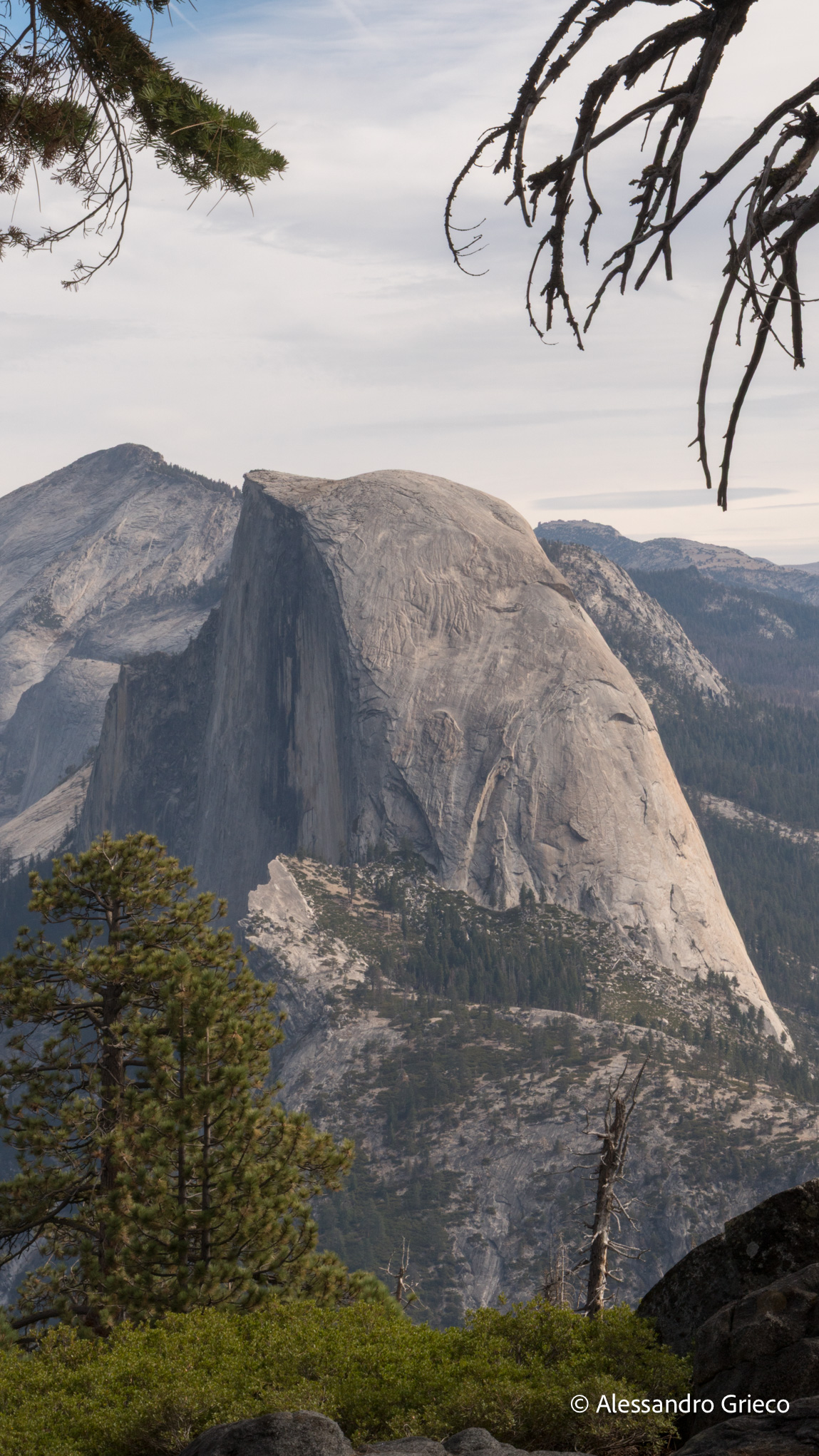
We caught Half Dome again at the end of the day, the granite gone the colour of a struck match, a pair of dead snags framing it on either side like the valley itself had built a window just for this. Below, the Merced River lay flat enough to double the whole scene, gold grass in the foreground, the mountain repeated underwater as if it needed saying twice. A Steller's jay sat watching us from a slab of bare rock, electric blue against all that grey stone, the one small loud thing in a place built at a scale that swallows sound.
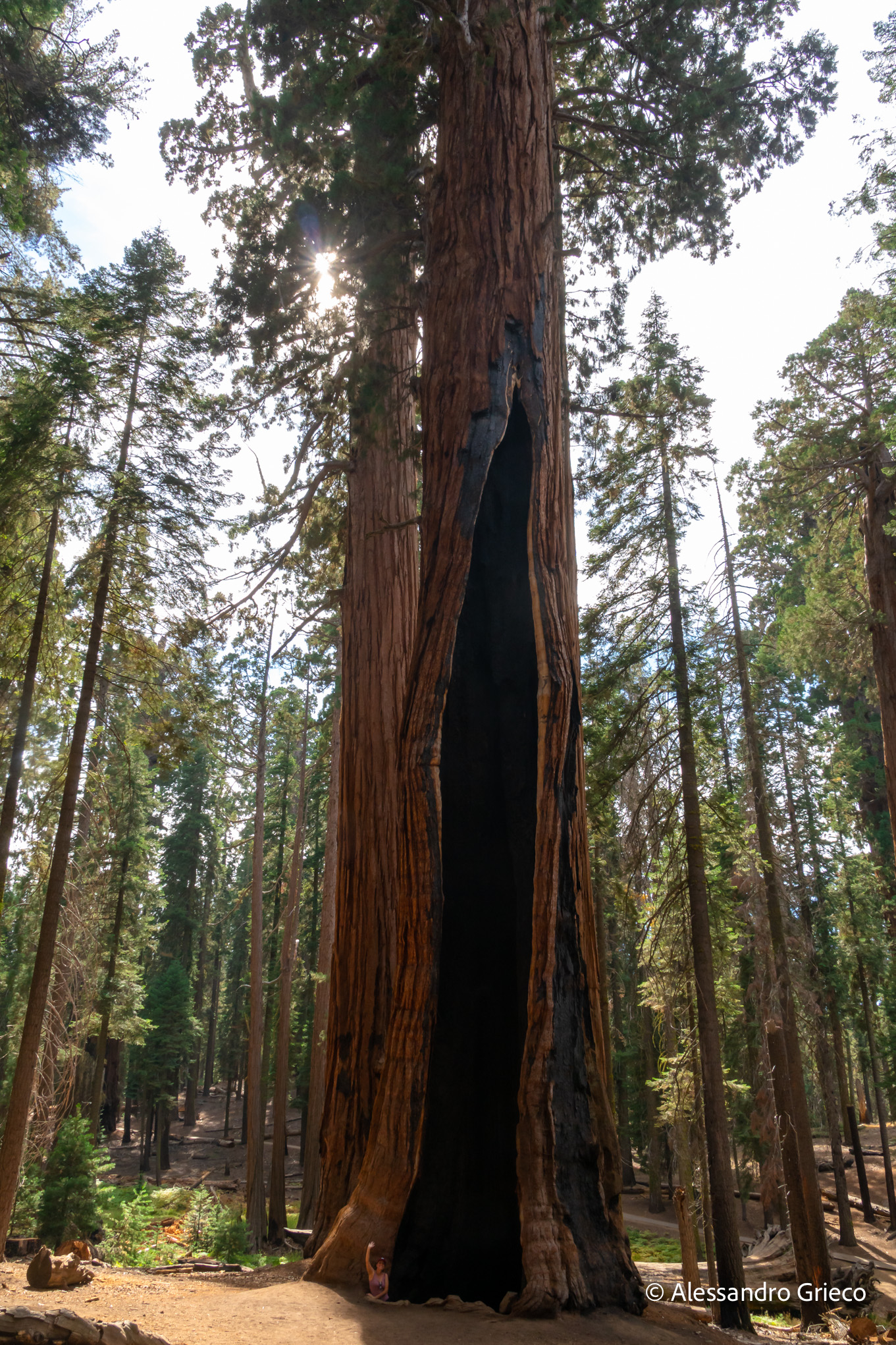
Sequoia is where the trees stop being scenery and start being individuals. We walked in among trunks wider than rooms, bark the colour of rust against canopy so green it looked lit from inside, and stood for a long time at the base of one that had been hollowed out entirely by fire at some point in the last thousand years — burned black on the inside, alive and green on top, a person standing in the cavity of it for scale, no bigger than a single rib in something that size. They told us afterwards that some sequoias actually need fire to reproduce: the heat is what finally opens their cones. The thing that should have killed it is the same thing that lets it go on. A Douglas squirrel worked at a cone overhead, completely unbothered, doing the same job these trees have always depended on.
Burned black on the inside, alive and green on top — the thing that should have killed it is the same thing that lets it go on.
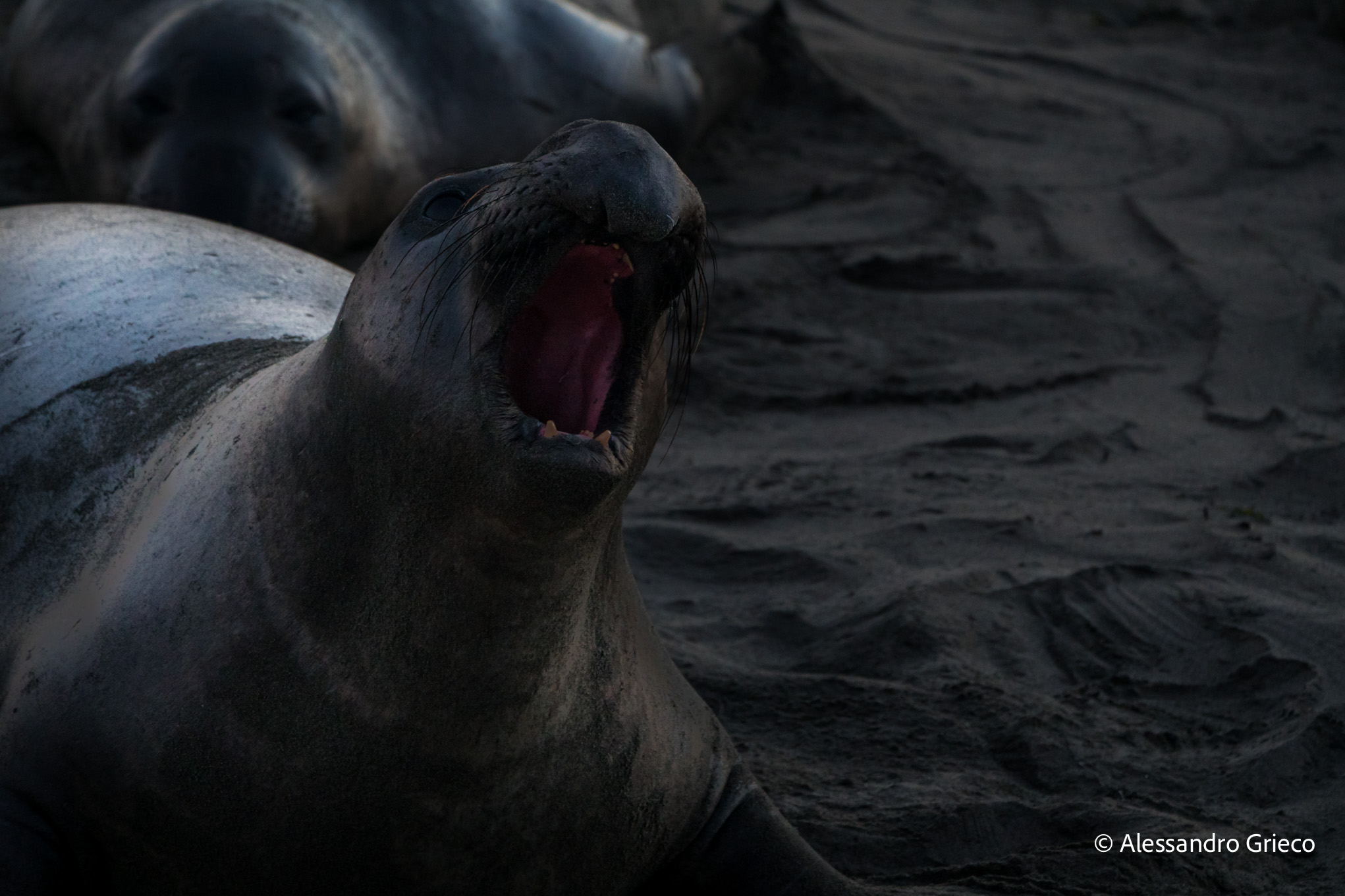
The coast, when we finally reached it past Big Sur, turned out to be the wildest stretch of the entire trip — not in scenery, though McWay Falls dropping straight onto a beach of its own private cove is hard to beat, but in how much was simply alive there, all at once, without any effort to find it. Sea otters lay on their backs in calm water like they'd been doing it for centuries, which, depending how you count, they had. Sea lions piled on the rocks barking at nothing. And further south, an entire colony of elephant seals had hauled themselves onto the sand — two young males rearing up nose to nose like they meant it, an older one with its mouth thrown open mid-roar, sand and salt and noise everywhere, the most unglamorous and most thrilling wildlife I saw on the whole trip.
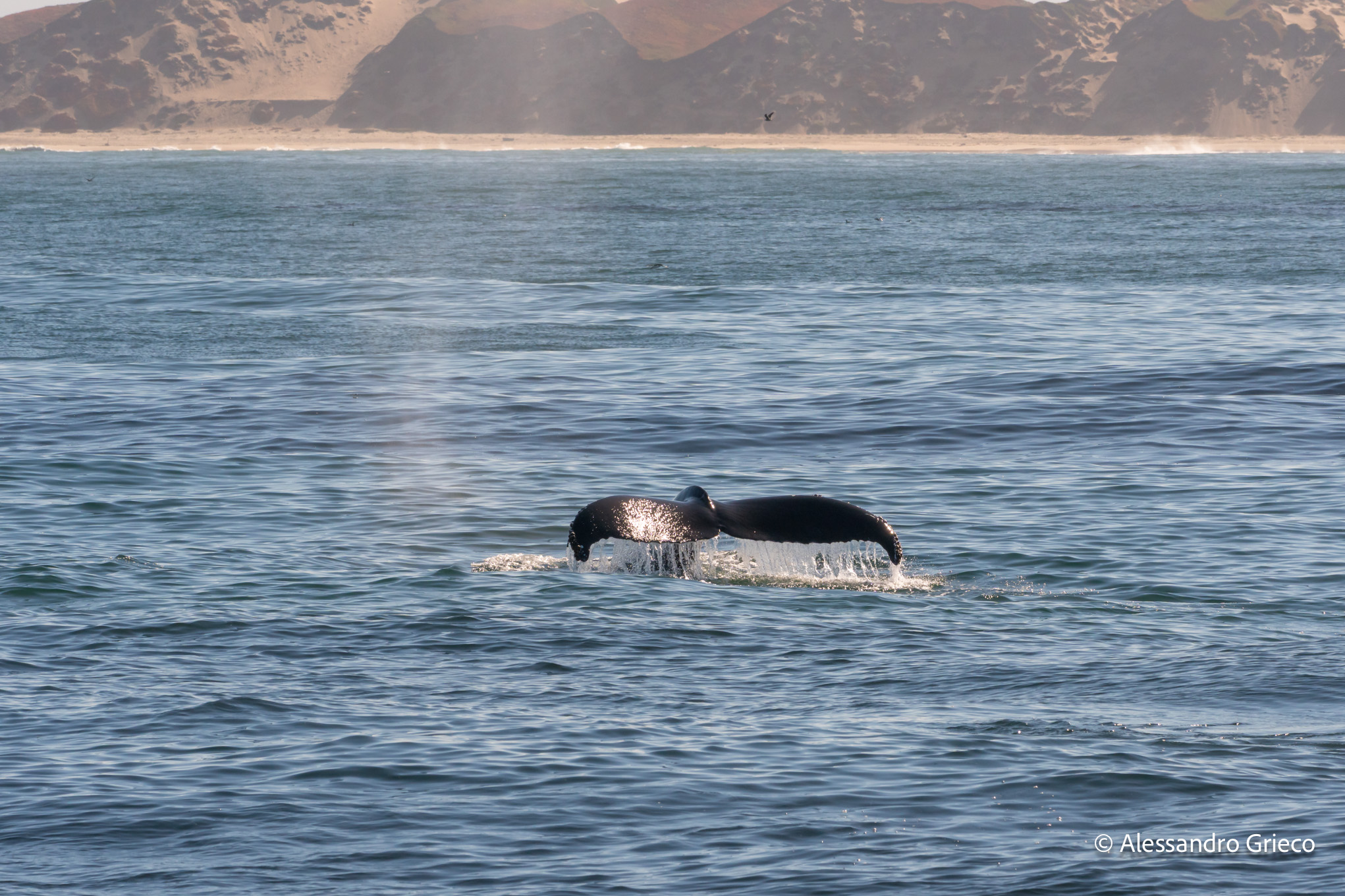
On the last evening, far out past the breakers, something dark rolled at the surface and went down again, slow, deliberate, a tail lifting clear of the water for just long enough to be unmistakable before it was gone — a whale, close enough to the shore that for one second the whole Pacific felt like something with a heartbeat. We stood there until the light went, the sky doing something orange and ridiculous over water that had just swallowed something the size of a bus without a sound, and I understood, finally, why this half of the country gets called green and the other half red: not the colour of the ground, but the colour of how alive each one turns out to be, once you actually stand in it.